Chapter I
Old names in older books
Tonight we follow the devils of Dungeons and Dragons from the old scriptures, poems and catalogues of spirits where their names first lived, down through each edition of the game and each layer of the Nine Hells. Along the way we'll meet the archdevils and their laws, follow their long war with the demons, and end at the bottom of the deepest pit, where a patient king still keeps his contracts.
Every devil in the game carries a name older than the game itself, so we begin far from any dice or rulebook, among the stories people told about the powers below.
The oldest of those names is . He first appears in the Book of , a short book set among Jewish exiles that some Bibles include and others leave out. In it a young woman named Sarah, daughter of , suffers a terrible misfortune. She has been married seven times, and each time her new husband has died on the wedding night, struck down by a jealous demon called Asmodeus. Then young comes to marry her. He travels with a companion who turns out to be the angel , and Raphael tells him what to do. Tobias burns the heart and liver of a fish, and the smoke drives the demon away. Asmodeus flees to upper Egypt, and there the angel binds him.
Remember that picture of a spirit driven off and bound, because binding will matter a great deal to the devils of the game. In later Jewish legend Asmodeus appears again as , a king among demons, caught up in tales of King Solomon and the building of the Temple. Over the centuries his reputation grew. The demonologist Peter named him the demon of lust. A seventeenth-century grimoire, the Lesser Key of Solomon, set him among its kings of spirits and described him strangely. He is strong and powerful, it says, and he appears with three heads, one like a bull, one like a man and one like a ram. He has a serpent's tail, and flames issue from his mouth.
That's a long way from the handsome, quiet, red-eyed figure the game would one day put on a throne in the deepest Hell, but the name came first, and the name carried a crown with it.
The second name is older still. In the second Book of Kings, King of Israel is hurt in a fall and sends messengers to ask a foreign god whether he will recover. That god is , the god of the Philistine city of , and the name means "Lord of the flies." Some scholars think the writer was mocking the Philistines. The god's real title may have been Baal-Zebul, "prince" or "exalted lord," and the writer turned it into a joke about flies. By the time of the New Testament the name had come to mean the chief of the demons. Later grimoires placed second only to Satan himself and linked him with gluttony and envy among the princes of Hell.
The game would choose the older and more dignified spelling, , the prince rather than the flies. It would also, in time, tell a story in which the flies came back to him as an insult. We'll reach that story when its edition comes.
The third name comes from Rome. , Father Dis, was the Roman lord of the underworld. At first he was tied to the fertile earth and the mineral wealth that lies beneath it, and later he was treated as the same figure as Pluto. In the sixth book of 's Aeneid, the hero walks through the desolate halls and empty realm of Dis and sees its mighty walls, a city ringed by a triple wall.
took that image and hardened it. In his Inferno, the first part of the Divine Comedy, the City of Dis holds the whole of lower Hell, from the sixth circle down to the ninth. Its walls are iron, and the river runs round them like a moat. Fallen angels guard the gates, with the Furies and Medusa beside them, and they shut the doors on Dante and his guide Virgil. Only a messenger from Heaven, coming down through the gloom, can open them. Centuries later engraved that city in deep blacks and greys, and the image of an iron city set inside Hell has never really gone away. In the game, the city of Dis would be ruled by an archdevil whose very name is Father Dis run together: , the Iron Lord.
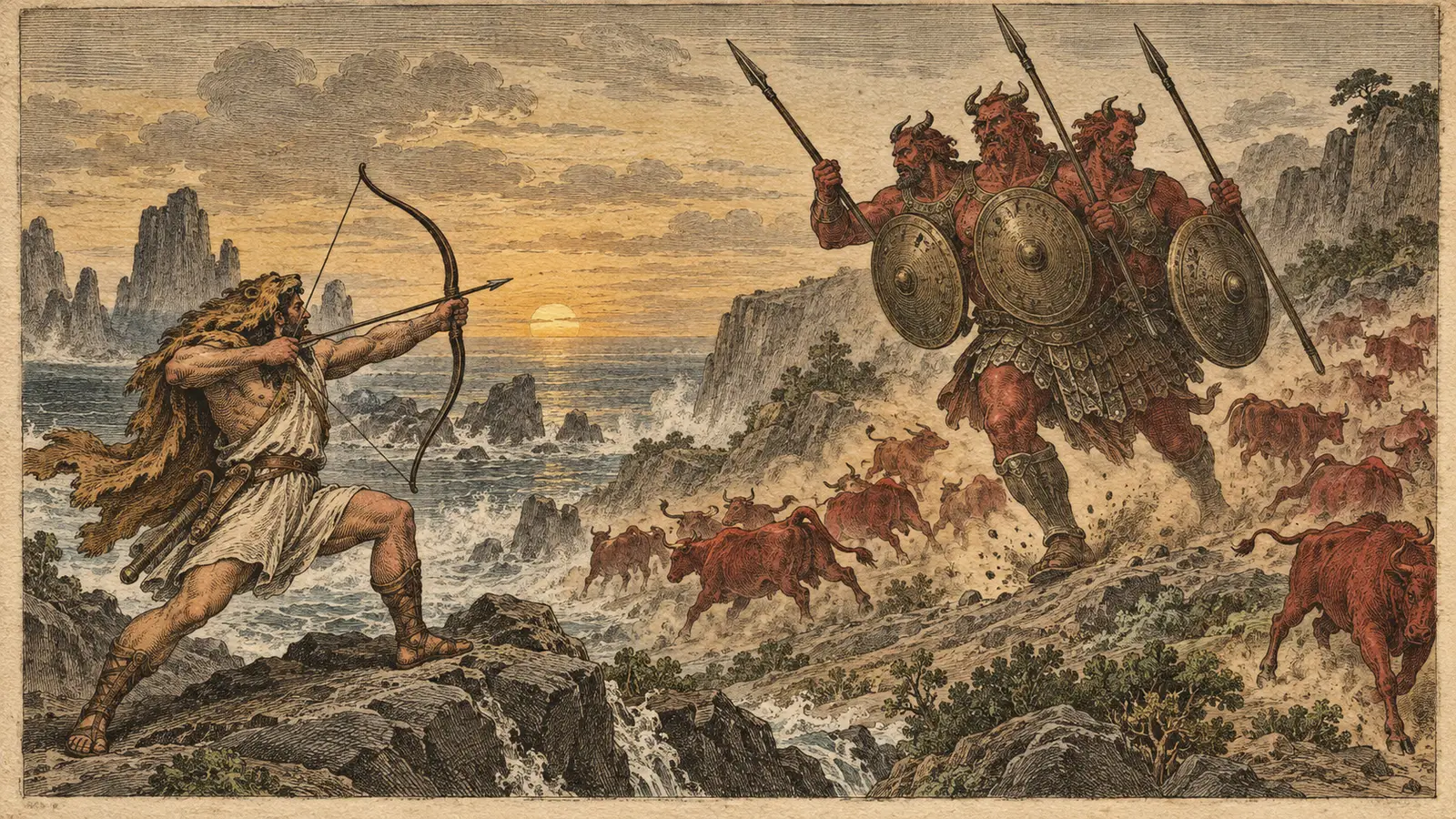
The fourth name belongs to a monster. In Greek myth is a giant who lives at the far western edge of the world. gives him three heads on one body, and other tellings give him three whole bodies joined together. He keeps a herd of red cattle, watched by the herdsman and the two-headed dog . comes for those cattle as one of his labours. Geryon fights him with three shields, three spears and three helmets, and Heracles kills him with an arrow dipped in the venom of the .
Dante changed him completely. In the seventeenth canto of the Inferno, Geryon is the Monster of Fraud. He has the face of an honest man, kindly and open, but below that face are the paws of a beast, the body of a serpent and a scorpion's sting at the end of his tail. He waits beneath a cliff between two circles of Hell and carries Dante and Virgil down on his back into the circles where the fraudulent are punished. The idea is a quiet and chilling one: deceit wears a pleasant face over a poisonous body. When the game came to draw its own Geryon, it drew a great winged serpent with a man's upper body and a venomous tail, plainly Dante's monster.
Then there are the Furies. In Greek myth the were spirits of vengeance, said in one account to have been born from the blood of the sky god . They cared about particular crimes: murder, wrongs done within a family, offences against the gods, and broken oaths. They punished with madness and disease and saw that curses were carried out. Three of them have names. is the unceasing one, the avenger of murder, and the one who holds a grudge. People were afraid to name them directly, so they called them the , the Gracious Ones, a polite word laid over a frightening thing. In Dante they stand on the walls of Dis. The game would make the erinyes a kind of devil, and their old concern with oaths fits them well, because no creature in any world cares more about a promise kept to the letter than a devil does.
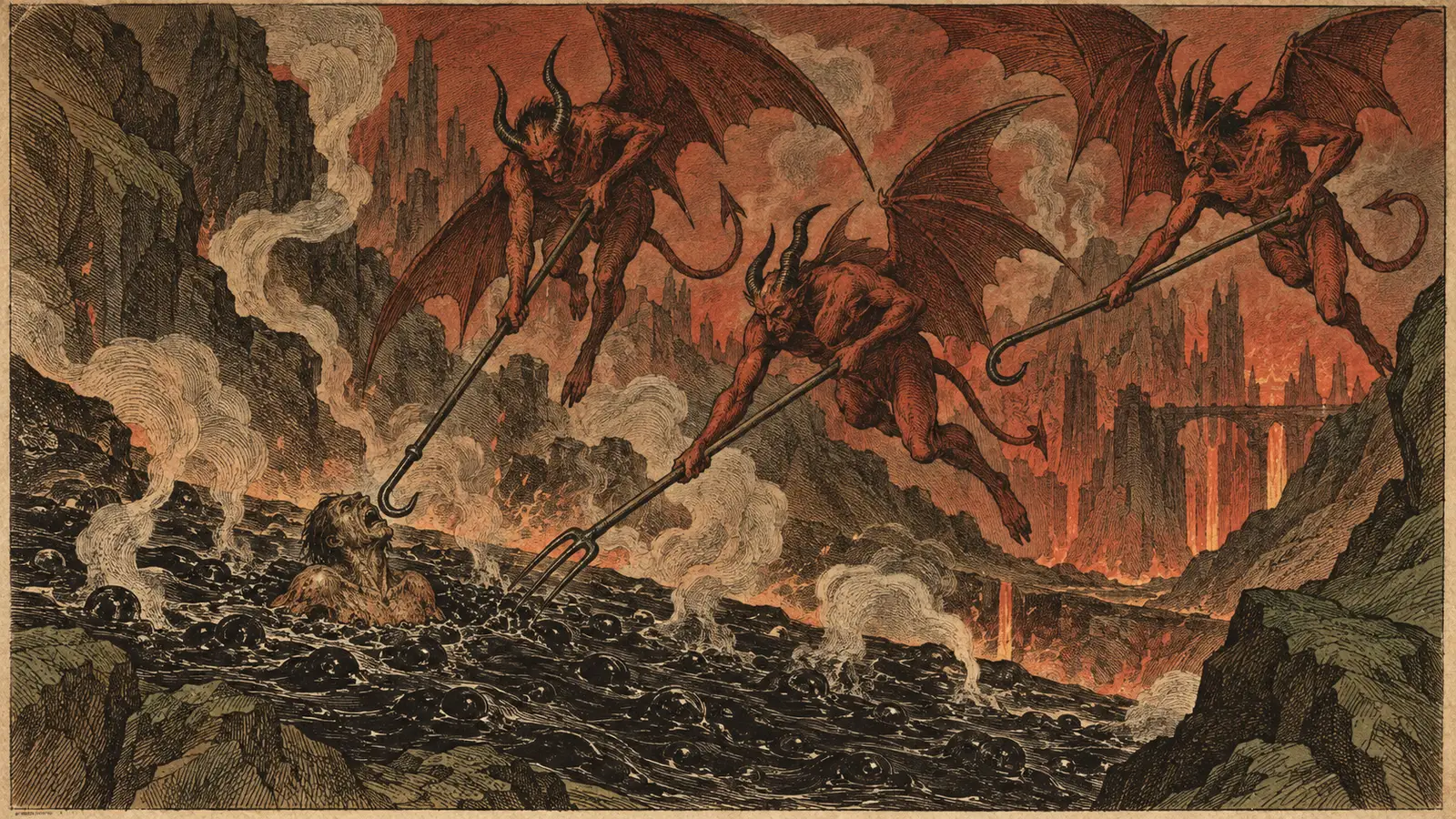
Dante gave more than names. He gave the shape. His Hell is a great funnel of nine circles, each lower than the last, with punishment growing heavier as you go down. At the very bottom is the ninth circle, , a frozen lake. It's divided into four rounds for traitors. holds traitors to their kin, traitors to country or party, and traitors to their guests. , at the centre, holds those who betrayed their lords and benefactors. Lucifer stands there, frozen to the chest in ice. He was once the most beautiful of the angels. Now he is a giant with three faces, one red, one a yellowish white and one black, and in each mouth he chews a traitor: Judas, Brutus and Cassius. Dante also gives us the , a band of devils with hooks and forks who patrol a ditch of boiling pitch, squabbling and scheming as they work. And Dante's Hell is crowded with creatures from older myth, among them centaurs, giants, harpies, minotaurs and Medusa herself, working beside the devils as tormentors of the damned. A good many of those creatures would one day walk the pages of the game.
You can hear the game's Nine Hells in those nine circles. You can hear Caina in the name of a frozen layer, and the Malebranche in the old name of a horned devil. And the fallen angel at the bottom of the pit, beautiful once and terrible now, is an idea the game would return to many years later when it told its own story of where Asmodeus came from.
If Dante gave Hell its shape, John Milton gave its rulers their voices. In Paradise Lost, published in 1667, Satan and the rebel angels wake on a lake of fire after their fall. They don't despair for long. Led by and the architect , they build a capital called , a palace for all the demons. In the second book Satan sits on a magnificent throne and calls a council. rises and argues for open war, since nothing could be worse than where they already are. answers in smooth, persuasive words and advises patience. Mammon proposes that they make Hell itself into a thriving empire that has no need of Heaven. At last Beelzebub, speaking for Satan, offers the plan they adopt: they will not storm Heaven, but quietly corrupt the new world of Man.
Milton's fallen angels are grand and articulate. They argue, plan and flatter one another. They're a court. Mammon, Belial and Moloch would all come into the game by those same names, and they would bring the manner of that council with them, the sense of great powers sitting in shadow and arguing over strategy.
Then comes the bargain. The legend of grew around a real man of the sixteenth century, a wandering scholar and conjurer. In the German Faustbuch, Faust wants knowledge and power beyond what mortals may have, and he makes a pact with the Devil. He signs it in his own blood, and the devil serves him for twenty-four years. Christopher Marlowe put the story on the stage in the early 1590s as Doctor Faustus. Johann Wolfgang von retold it in his Faust, whose first part appeared in 1808, where Mephistopheles serves Faust on earth in return for Faust's service in Hell, and again the contract is signed in blood. The deal with the devil became one of the most familiar stories in the world. It's the clearest ancestor of the contract-bound, soul-trading devils of the game, and Mephistopheles himself would come into the Nine Hells as one of its greatest lords.
There's one more thread, and it's a dry, bookish one. In 1577 the physician published a catalogue of spirits called the Pseudomonarchia Daemonum, the false monarchy of demons. It listed sixty-nine of them, each with a rank: kings, dukes, princes, presidents and marquises. Each commanded so many legions, and each had its hours and rites for summoning. A few years later Reginald Scot printed an English translation in his Discoverie of Witchcraft, and that text fed into the Ars Goetia, the first book of the Lesser Key of Solomon, with its seventy-two spirits and their seals. In 1818 published his Dictionnaire Infernal, an infernal dictionary that arranged the demons into hierarchies. Its best-known edition, from 1863, carried illustrations by showing what each demon looked like. Collin de Plancy had started out as a sceptic who mocked belief in such things, and by the end of the 1830s he had become a devout Catholic, which is its own small story of a man who spent long enough among devils to change his mind about them.
What these books gave the game was the idea of Hell as an administration. Hell has ranks and offices. Its nobles command legions, and those legions answer upward to someone. Many of the dukes who would crowd the pages of the game's magazines in the 1980s took their names from these catalogues.
The last thread is the one that made the devils devils and not demons. Gary , co-creator of Dungeons and Dragons, said the game's alignment system grew out of the fiction of Michael and Poul Anderson. Moorcock's stories set Law and Chaos against each other in an endless cosmic struggle and made mortals choose a side. The first version of the game, in 1974, offered only lawful, neutral and chaotic. In 1976 Gygax wrote an article for The Strategic Review that added a second axis, good and evil, and the game took it up. That same year the supplement Eldritch Wizardry brought in demons, listed as chaotic and noted as highly evil besides.
The game had chaotic evil, then, but nothing lawful to stand across from it. Lawful evil needed its own host, an evil of rules, ranks, chains of command and kept promises. When it came, it was built from every thread we've just followed: Dante's layered pit and iron city, Milton's council of articulate schemers, the Furies' care for oaths, Weyer's catalogue of dukes with their legions, and Faust's contract signed in blood.
That host arrived in the following year, in a single book.
Chapter II
The lawful host of 1977
In December 1977 TSR published the Monster Manual, the first hardcover rulebook of what would become Advanced Dungeons & Dragons. Gary wrote it. It held more than three hundred and fifty monsters, most of them with a picture, and the art came from David C. Sutherland III, who painted the cover, along with Dave , Tom Wham and Jean Wells. Somewhere in its pages, between the dinosaurs and the dragons, was the entry for devils.
The demons who had come a year before were wild things, each kind a different shape of appetite and rage. The devils were introduced quite differently. Every one of them was lawful evil, and every one had a place in a strict hierarchy. Rank was the first thing the book said about them.
At the very bottom were the lemures. The name comes from Roman belief, where the lemures were the restless, wandering dead. In the game a lemure is barely a creature at all. It's a shapeless mass of flesh, the form a damned soul takes when it arrives in the Nine Hells, with everything that made it a person stripped away. It has no name and no memory, and it will never again have a face. It shuffles where it's told to go.
Above the lemures came the lesser devils. The barbed devil is covered in spines. The bone devil is gaunt and skeletal, and the cruelty of its office shows in its frame. Then there were the erinyes, the Furies of Greek myth brought into the lawful ranks of Hell, winged and grave.
Above those came the greater devils. The horned devil carried a second name taken straight from Dante, malebranche, after the hooked devils who patrol the pitch in the Inferno. The ice devil is a tall, cold, insect-like figure. Highest of all the ordinary ranks was the pit fiend, a great winged and horned general of Hell, the most fearsome devil that wasn't a lord.
The book said something important about how a devil moves through these forms. A devil isn't born a bone devil and doesn't stay one. It's promoted. It earns its way upward and is transformed as it rises, taking a new shape with each new rank. As it climbs, it purges more of the chaos from its thoughts and behaviour, so that the ice devils and pit fiends at the top of the common ranks are the most thoroughly lawful and rigid creatures in Hell. You could picture it as a soul arriving as a formless lump of flesh and then, over unimaginable time, being shaped rank by rank into something hard, cold and exact. Promotion polishes away the chaos.
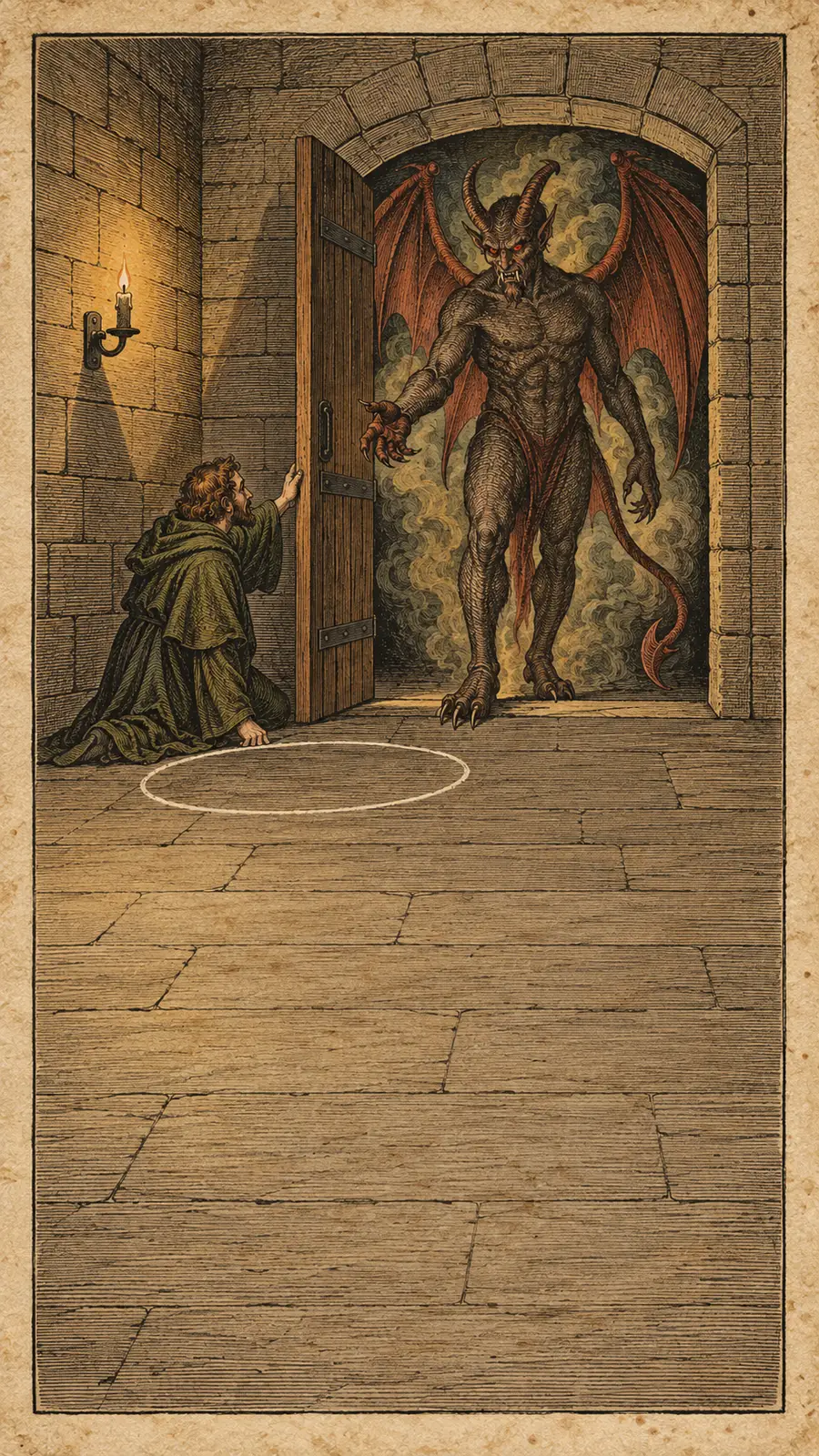
Devils could call others of their kind to them, much as a wizard might summon monsters. And they had names that could be used against them. A devil could be called and bound with the right name, the right ritual and the right protective circle drawn on the floor, such as the old pentagram. Later editions would add a great deal to this, with secret true names and talismans that bear them, but even in 1977 the idea was there. Old had bound with smoke in upper Egypt, and in the game a careful conjurer might do something similar with a name and a drawn circle, at least for a while, and at real risk.
Imps had an entry of their own. They're tiny devils, and their purpose was very particular: they were made to serve as familiars to lawful evil magic-users and clerics, little companions on the shoulder whose powers were meant to advance the interests of the Nine Hells. An imp could change into two other forms, chosen from a large spider, a raven, a giant rat or a goat, and its tail carried a venom that could kill. The hell hound had its own entry too, though it was older than this book, having come into the game in the Greyhawk supplement of 1975. The nightmare was there as well, a black horse of the lower planes with burning hooves.
Then there were the lords. The 1977 book named four archdevils, and every one of them came from the old books.
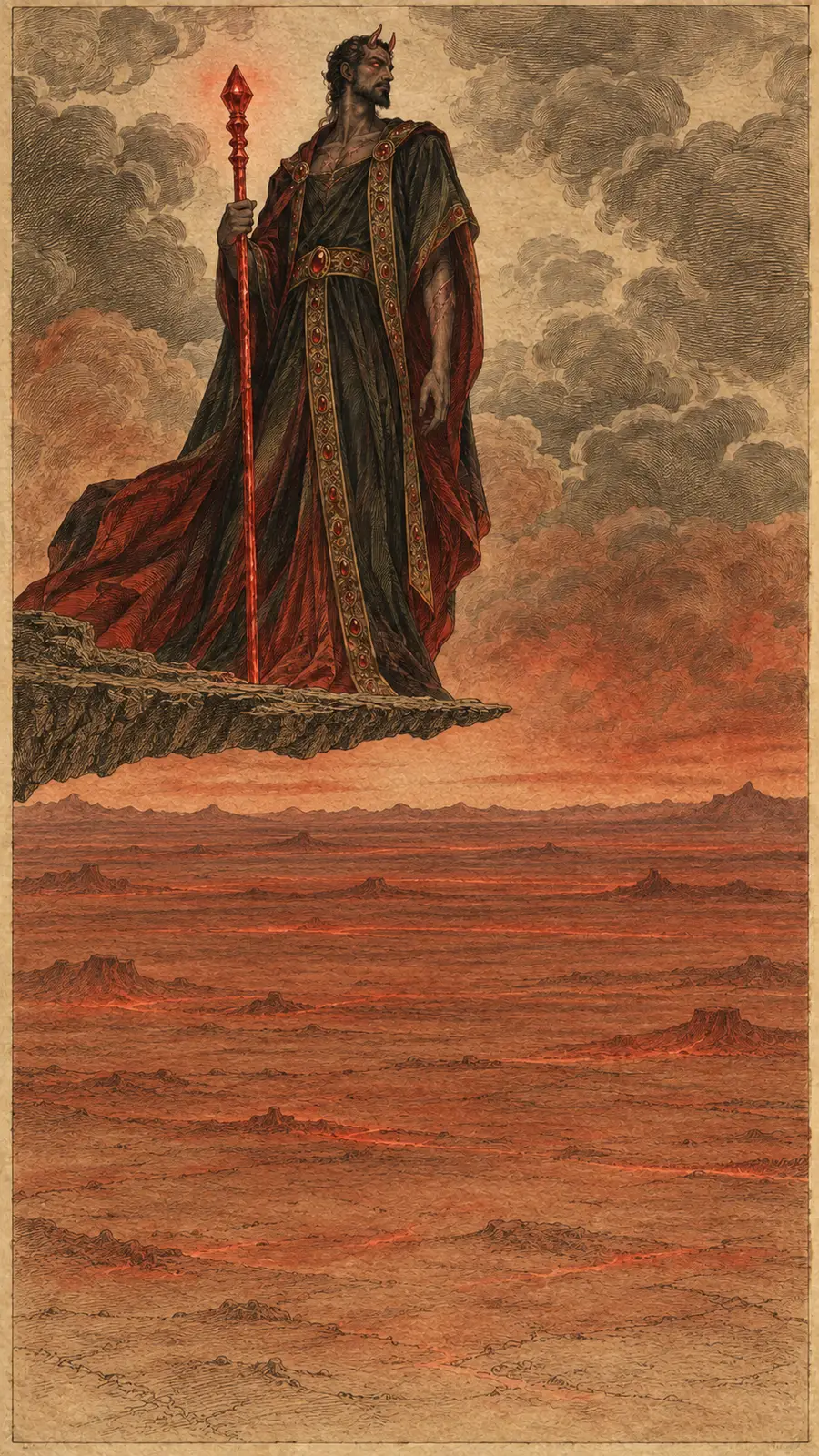
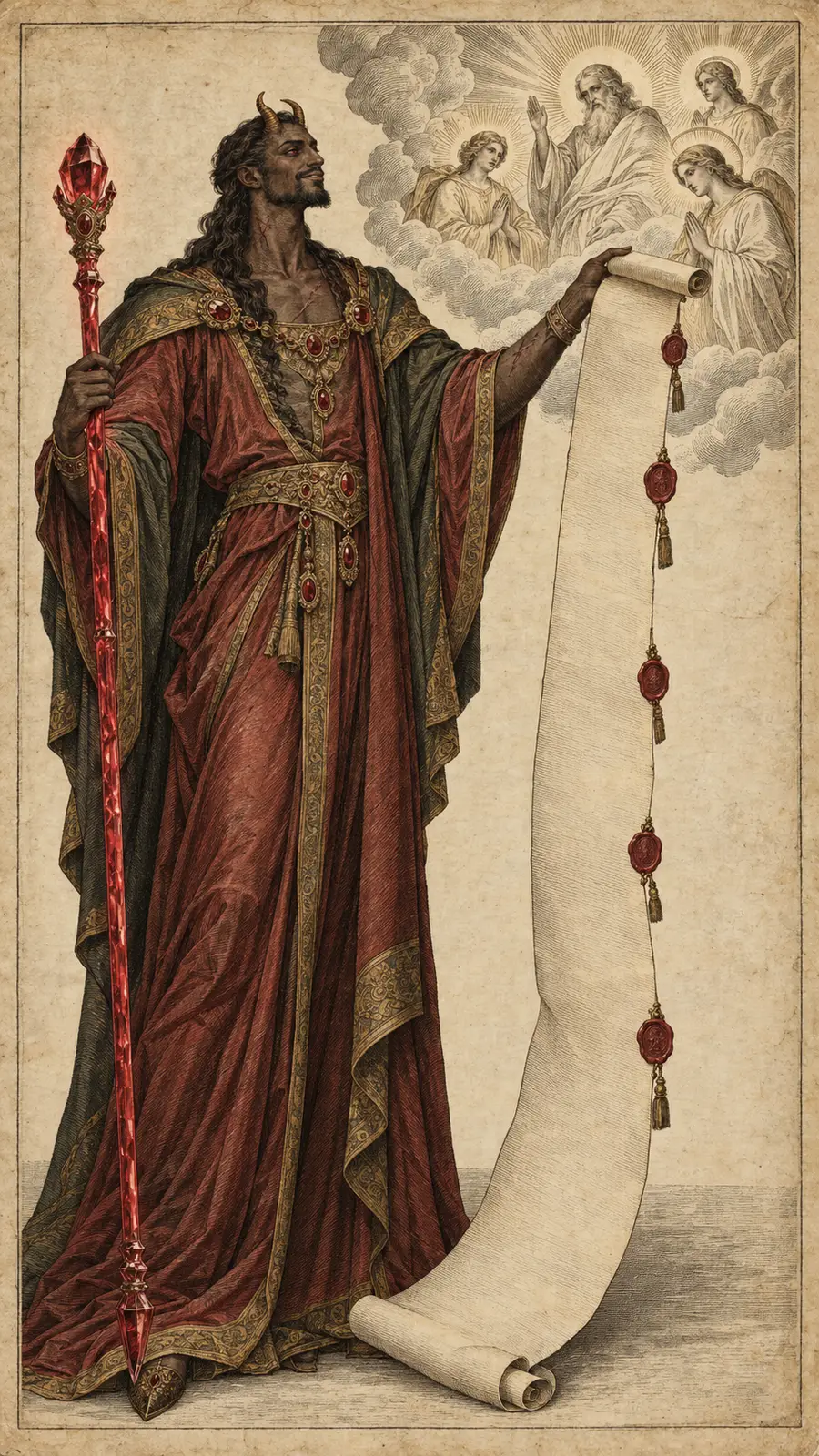
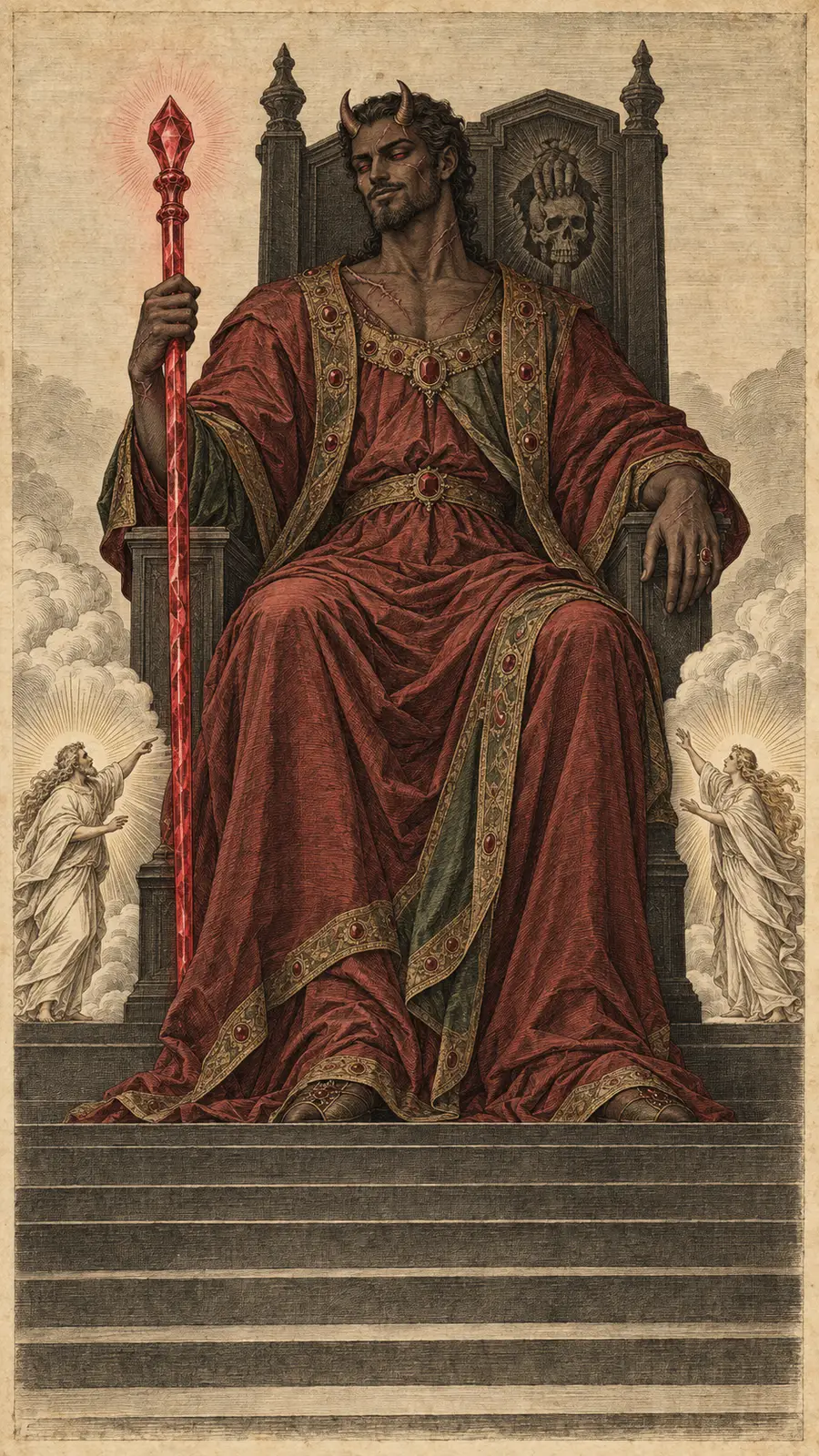
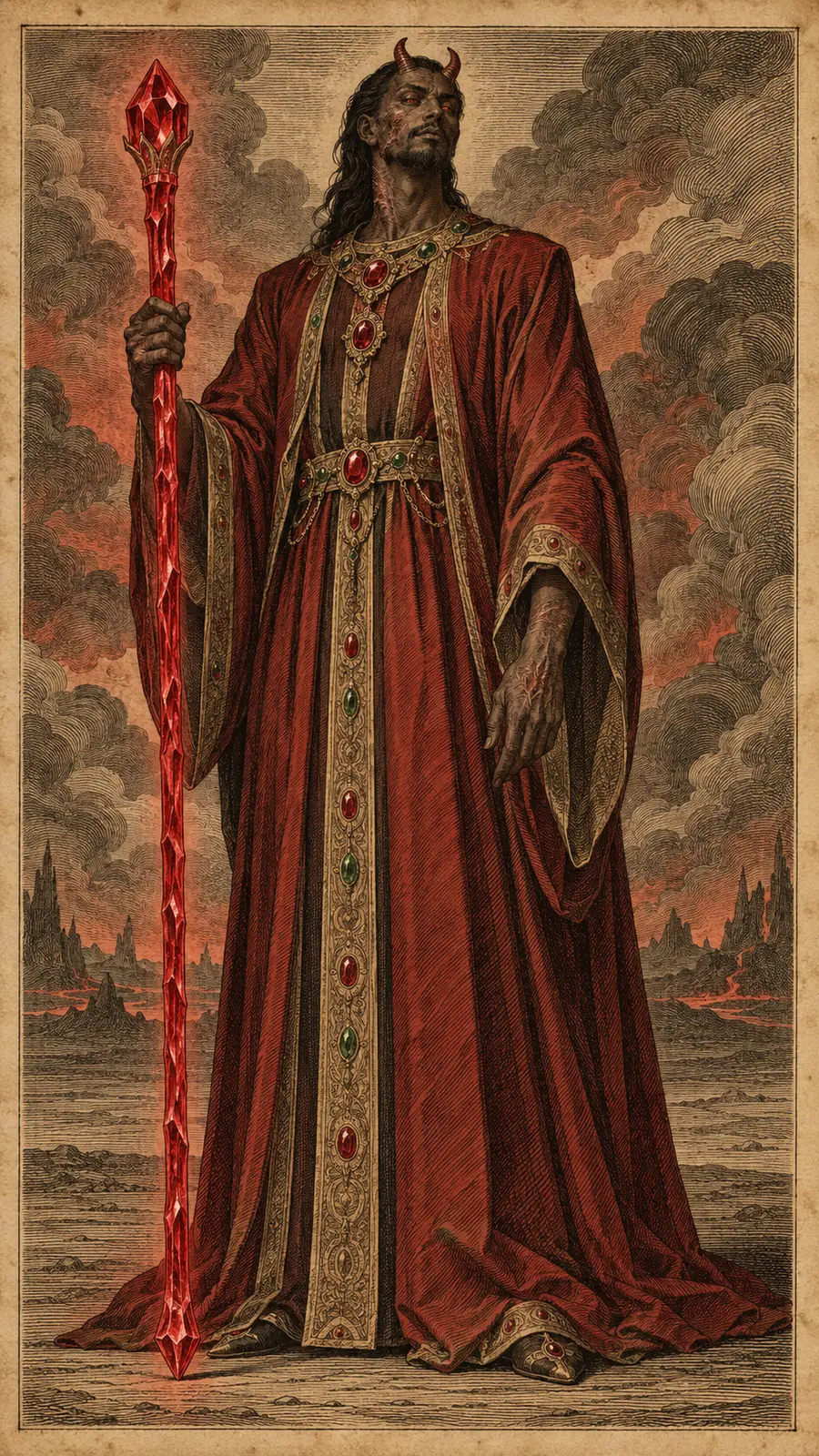
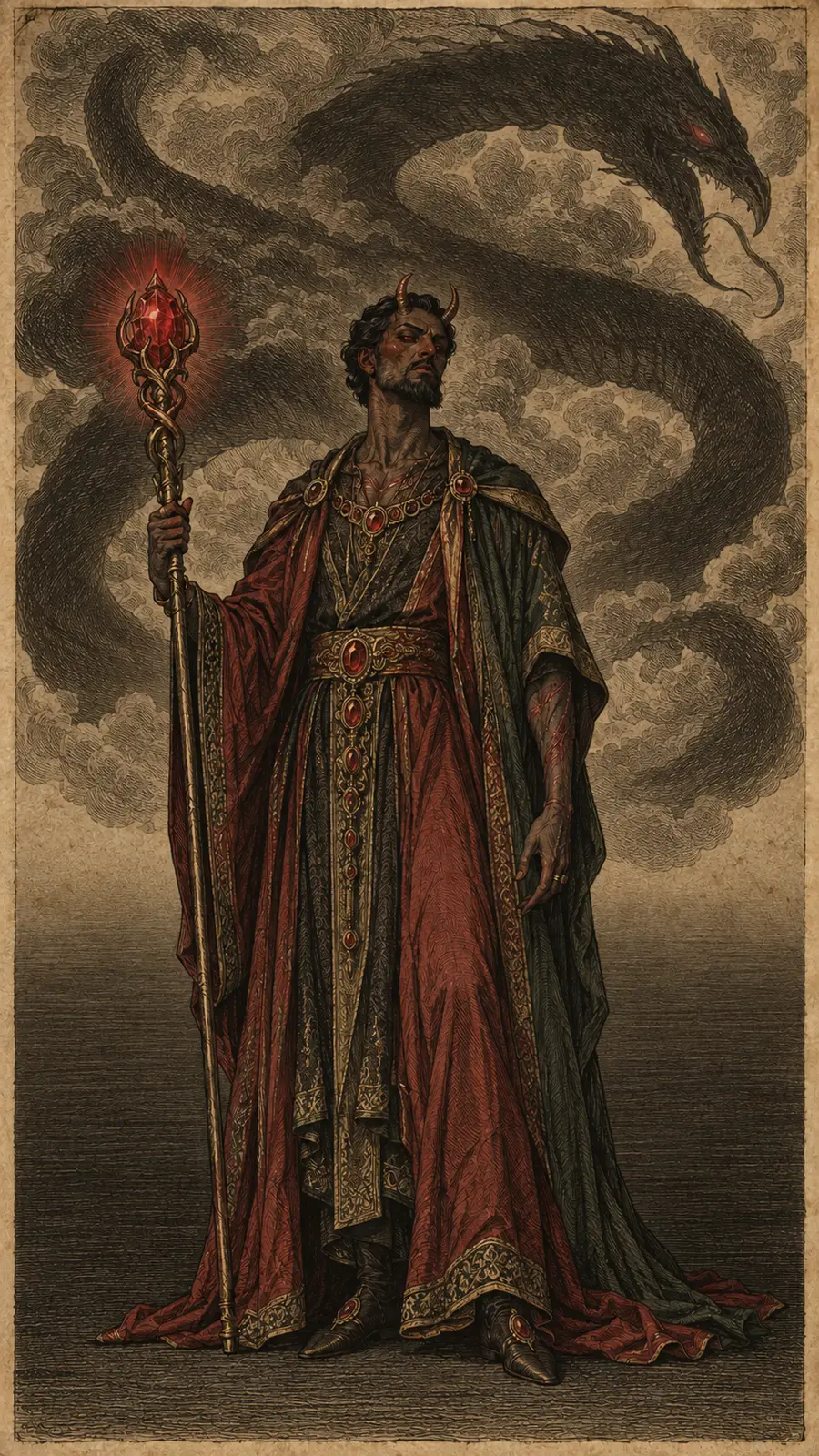
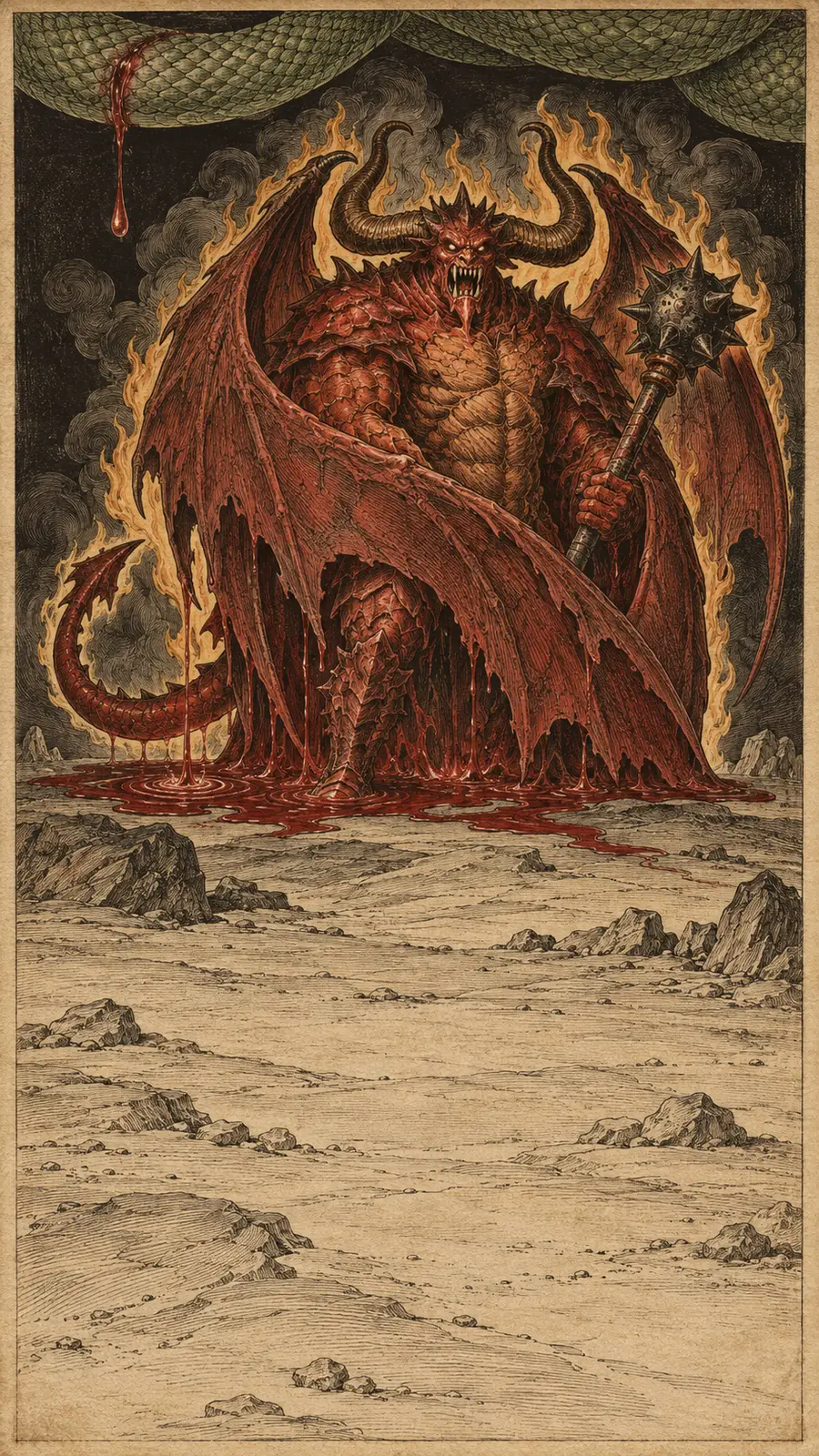
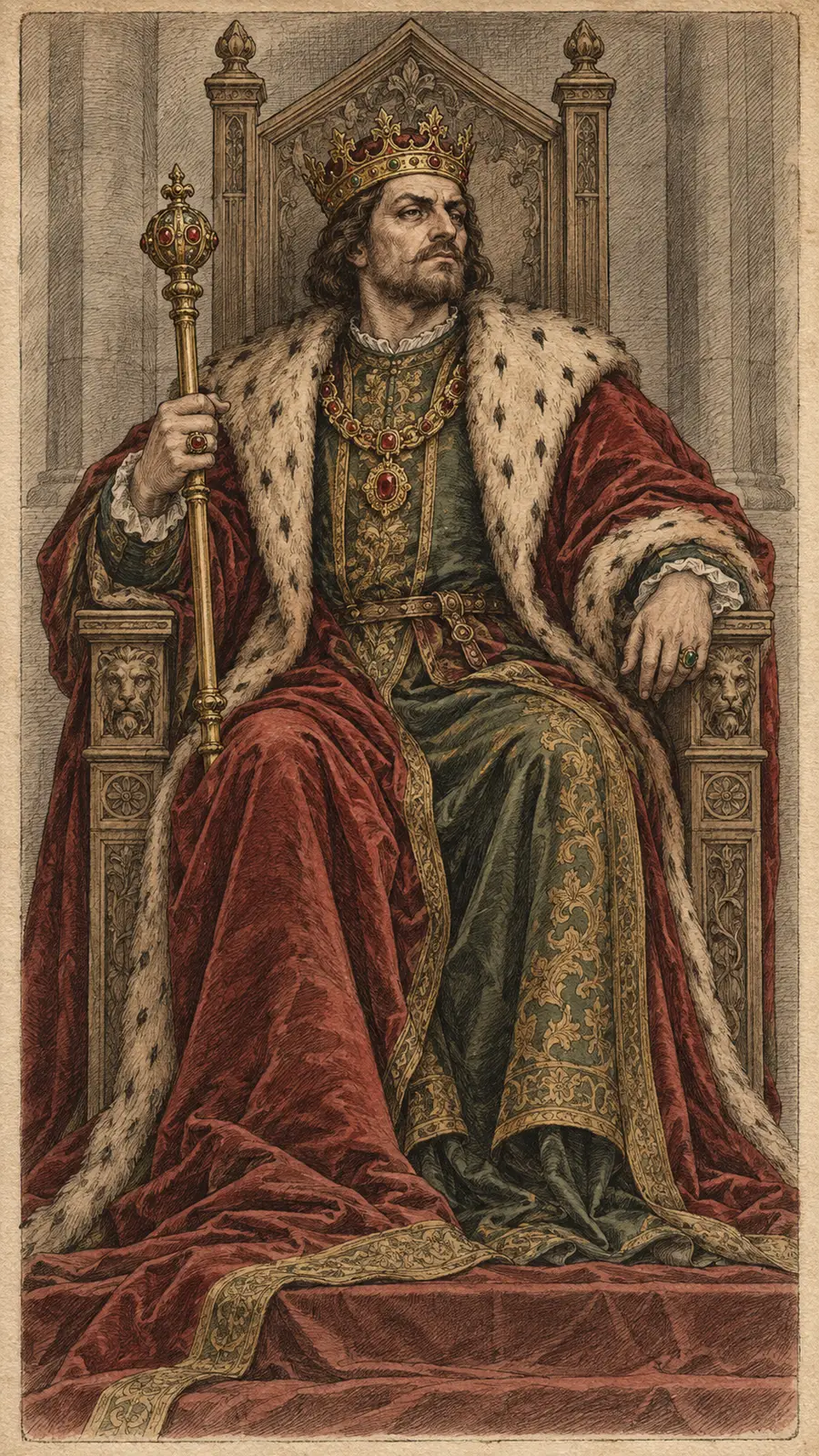
Asmodeus was overlord of all the dukes of Hell, the others included. He ruled from the ninth and lowest plane of Hell, the bottom of the pit. He carried the Ruby Rod, a rod of pure, glowing ruby said to be as old as time, the badge of his office and a weapon besides. He's described as a giant, handsome humanoid more than thirteen feet tall, with dark skin and dark hair, red eyes and two small horns on his brow. His symbols were a clawed fist gripping a skull, the ruby-tipped rod and an inverted pentagram. There was no ram's head and no flames from the mouth here. The game's Asmodeus was beautiful, and that was the more unsettling choice. He looked like someone you might take advice from.
, the Lord of the Flies, ruled the sixth and seventh planes of Hell. In the older art he's a tall, dark humanoid with the compound eyes of a fly, a reminder of where his name came from.
ruled the second plane, and his plane had something none of the others yet had: a name. It was Dis, the iron city, 's walls and Dante's iron gates brought into the game. Dispater is seven feet tall and evilly handsome. He looks almost human, apart from small horns, a tail and one cloven hoof on his left leg, which is the kind of detail that stays with you once you've read it. His rod serves both as a rod of rulership, to command, and as a staff of striking that hits twice as hard as a common weapon.
ruled the fifth plane. He was Dante's beast in full: a man's upper body, great bat-like wings and a long serpent body ending in a barbed, venomous tail. His prized possession was a horn that could summon minotaurs, another creature from the old myths that Dante had placed in Hell. He could also take smaller shapes when it suited him, such as an ogre, a minotaur or a tiger.
One more ruler stood at the top of the pit. The first plane of the Nine Hells, the entrance and the first circle, was given to , the great evil dragon goddess with five heads, who dwelt there and spawned evil dragonkind. It's an odd and striking detail, a queen of dragons ruling the outermost layer of the devils' home, and it would cause later writers a good deal of thought.
Apart from Dis, the planes of Hell had no names in 1977. They had numbers. You'd read of the second plane, the fifth plane, the ninth and lowest plane. The Hells were there as a shape, nine layers going down with a lord set over several of them, but most of the country was still dark. It's rather like being handed a map of a great building that shows the floors but not the rooms.
The building itself had been sketched a few months earlier. In July 1977, in the eighth issue of the magazine then called The Dragon, Gygax wrote an article with the formidable title "Planes: The Concepts of Spatial, Temporal and Physical Relationships in D&D." In it he laid out a cosmos of sixteen outer planes arranged around the world of mortals. He named the lower ones with a kind of grim relish: the Nine Hells, the three glooms of Hades, and the six hundred and sixty-six layers of the Abyss. The plane of ultimate law he called Nirvana, and the plane of ultimate chaos Limbo. The diagram that went with it was an early, many-coloured version of the chart that later appeared in the Players Handbook, where the planes would come to be pictured as a great wheel.
In that wheel the Nine Hells were the plane of lawful evil. On one side lay , between lawful neutral and lawful evil, and on the other , between lawful evil and neutral evil. Across the wheel lay the Abyss, chaotic evil, with its hundreds upon hundreds of layers.
That arrangement already says a good deal. The Hells had nine layers, counted, ordered and ruled. The Abyss had six hundred and sixty-six layers, a number meant to suggest something that goes on far past the point anyone could keep count. On one side was a structure, and on the other a sprawl. Even in 1977, before anyone had written a word about a war between them, the two evils sat across the wheel from each other like opposing armies on a map. The war would come later. What came first was the long work of filling in the Hells, and it was done by a young writer from Canada.
Chapter III
Ed Greenwood opens the gates of the Nine Hells
Through the late 1970s the Nine Hells stayed mostly as the Monster Manual left them, with four lords, a handful of devil kinds and nine numbered planes. People wondered, of course, what lay between the lines. In 1979 a writer in Dragon named Alexander von Thorn imagined a politics of Hell in which a great lord called had once ruled the archdevils until overthrew him. Afterwards, the story went, the fallen ruler was known by the lesser name , Lord of the Flies, and the flies were the little devils who now swarmed around him. The article said plainly that it was not official doctrine, but the idea had a long life, and later canon would echo it.
The real opening of the gates came in the summer of 1983. Two things arrived in Dragon that July, and both were about devils.
The first was a preview from himself, under the heading "From the Sorcerer's Scroll: New Denizens of Devildom." It showed off creatures from the coming Monster Manual II, which appeared that same year. There were new devils of the lowest ranks, among them the spined devil, a small, quilled creature of the least devils. There were the abishai, lesser devils in five colours, black, blue, green, red and white, which are the colours of the evil dragons and no accident, because the abishai serve . There was a princess of Hell, . There were dukes with names out of the old catalogues, among them , , Bitru, and .
And there were four new archdevils, , , and : Milton's council and 's tempter, brought into the game together.
Mammon, the lord of greed, stands twelve feet tall, with scaled skin of red and gold and wings that, as the description puts it, "gleam like rubies." Mephistopheles is nine feet tall and blue-black, handsome in a diabolical way and enormously muscled, with a voice like whispering wind. His wings, horns and talons are a deep blue and his scales a sooty black. Moloch is square and heavy, with red-orange skin, short thick limbs, great square hands and feet with horns on them, and a huge horned head with slanting, fiery eyes above a gaping mouth.
The second arrival was much bigger. In the same July issue, and in the August issue after it, Dragon ran a two-part article called "The Nine Hells" by Ed Greenwood. Greenwood was the young Canadian whose home campaign was a world he called the Forgotten Realms, which would soon become one of the game's great settings. He'd written about the Hells for his own players, and Gygax gave his blessing to the work. What Greenwood produced was the first great, detailed vision of any plane beyond the mortal world. People who came after him would treat it as the template for describing other planes, and it became the foundation of the Hells the game still uses.
The first thing Greenwood did was name the layers, and those names have never really changed. From the top down, they are , Dis, , , , , , and .
Each name carries an echo. Avernus is the lake near Naples that the Romans believed was an entrance to the underworld. Dis we already know. Phlegethos is the river of fire in Greek myth. Stygia belongs to the . Malbolge recalls Dante's , the eighth circle with its ten ditches of fraud. Caina is Dante's round for traitors to their kin, and later writers would spell it . Nessus was a centaur of Greek myth, whose poisoned blood killed ; Dante set him to guard a river of boiling blood.
Greenwood said each layer stretches infinitely in every direction and has its own physical laws. The Hells aren't nine rooms in a house. They're nine whole worlds stacked one beneath another.
Let's walk down through them as his tradition pictured them.
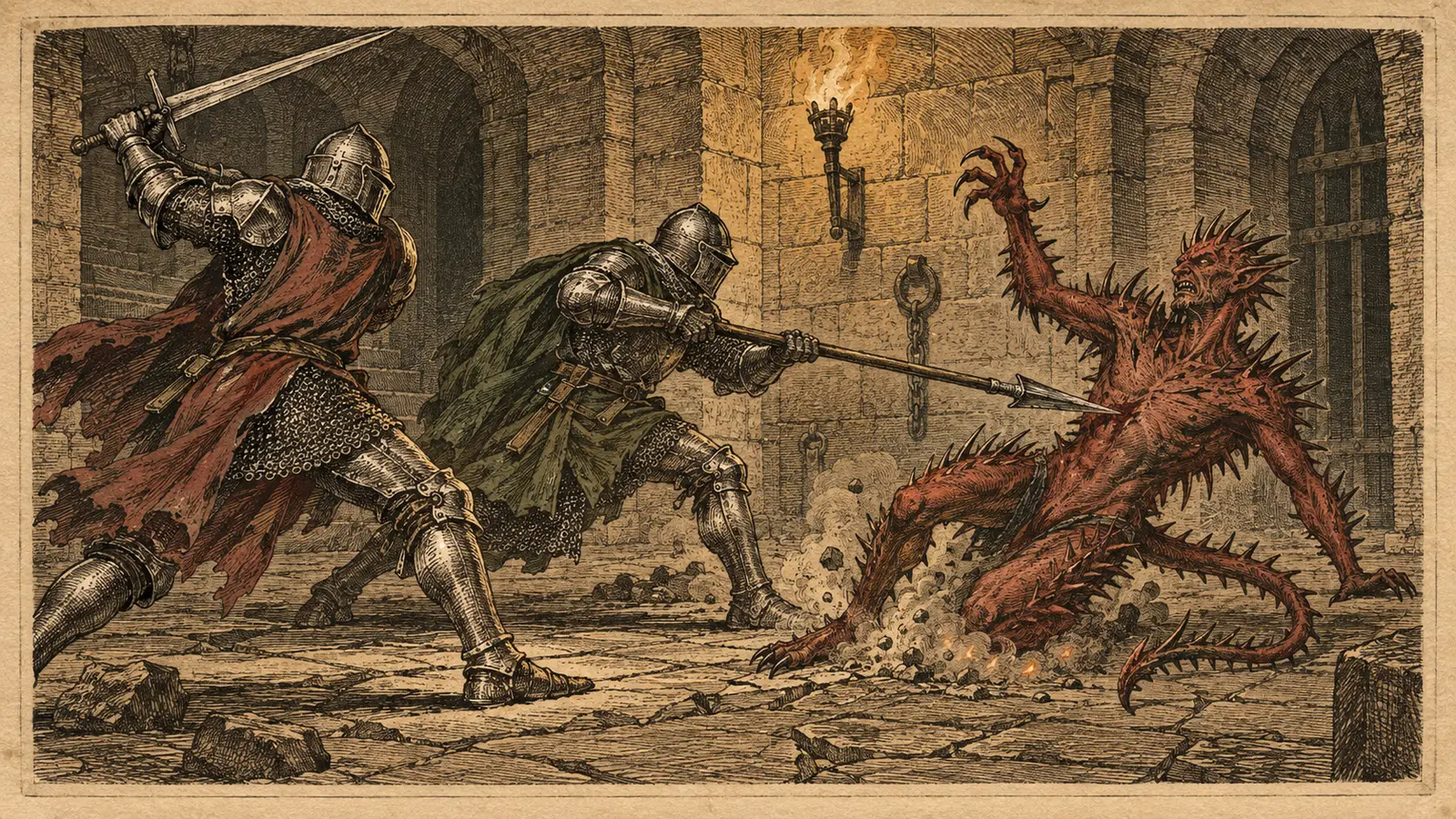
The first part of the article covered the upper five layers and opened with a full-page picture of two heroes standing over a fallen barbed devil. The first layer, Avernus, was Tiamat's, the Chromatic Dragon's, and in her keeping it was the gate of the whole pit.
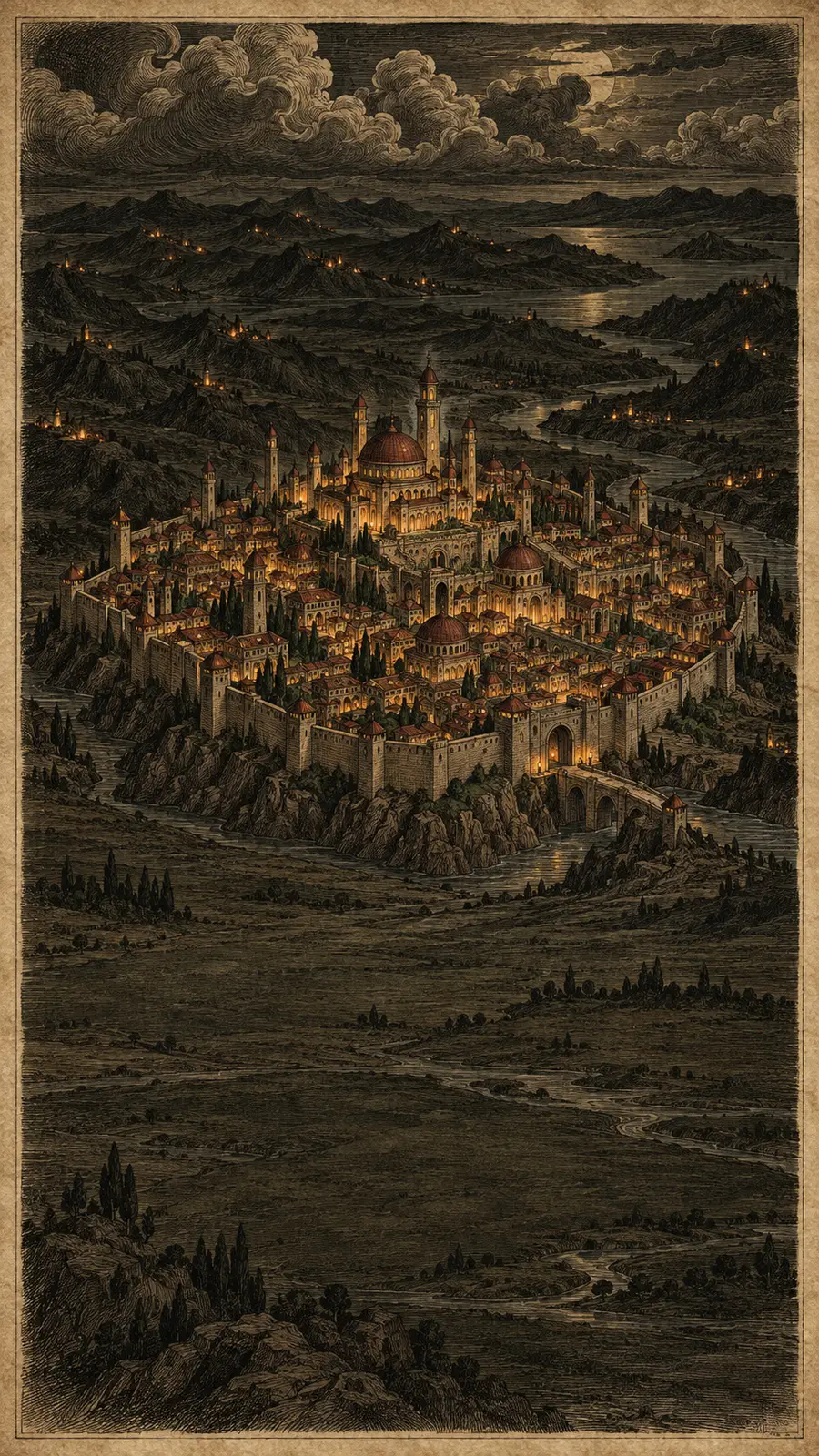
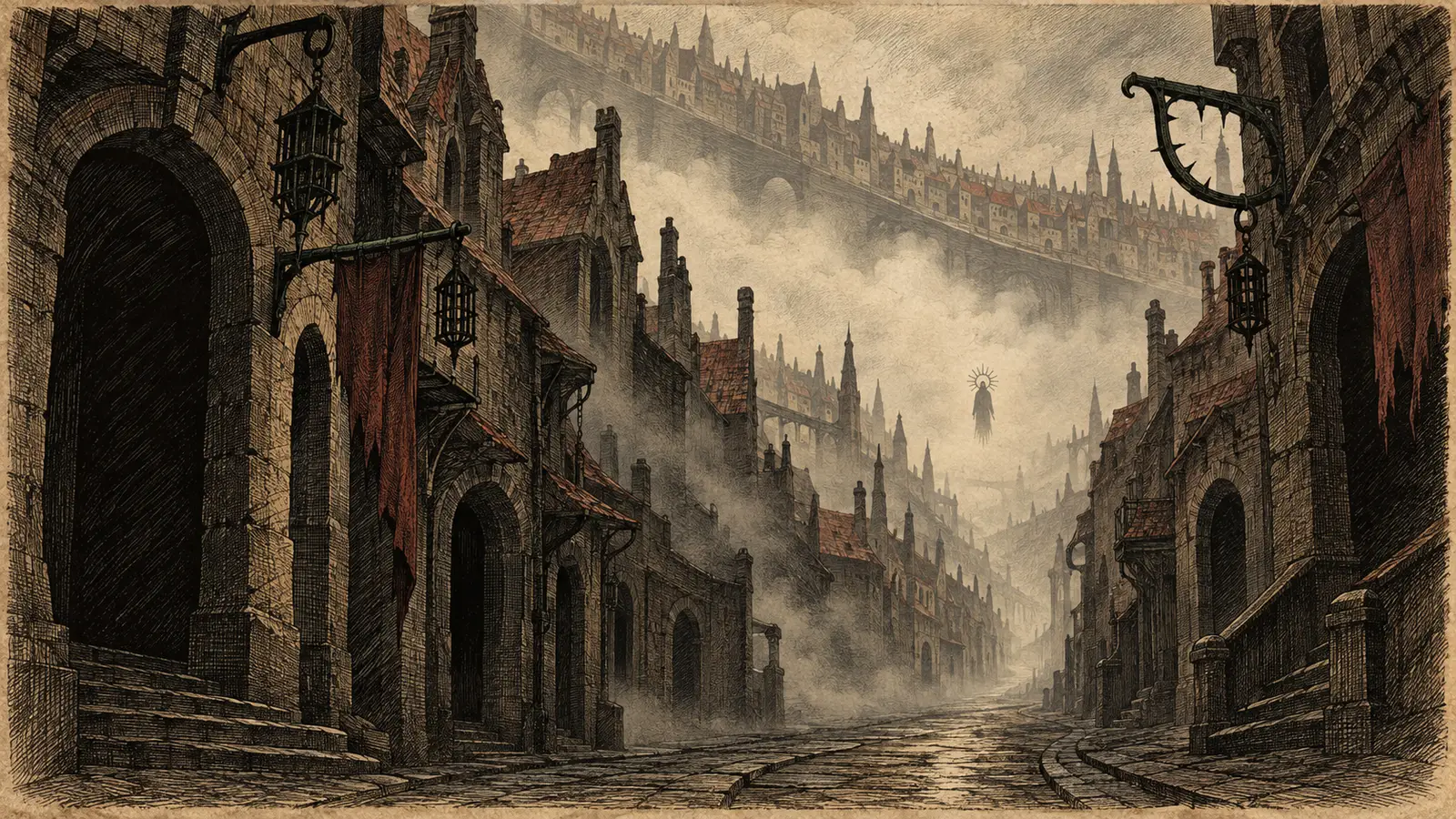
Below it lay Dis, 's iron city, and here you can almost feel the heat coming off the page. Dis is a maze of searing iron ramparts and black towers, of alleys, slums and squares where iron gargoyles brood, all sprawled over steep hillsides. At its heart stands the Iron Tower, Dispater's throne. Iron is a cold metal in the mind, but here it's hot to the touch, and it's everywhere.
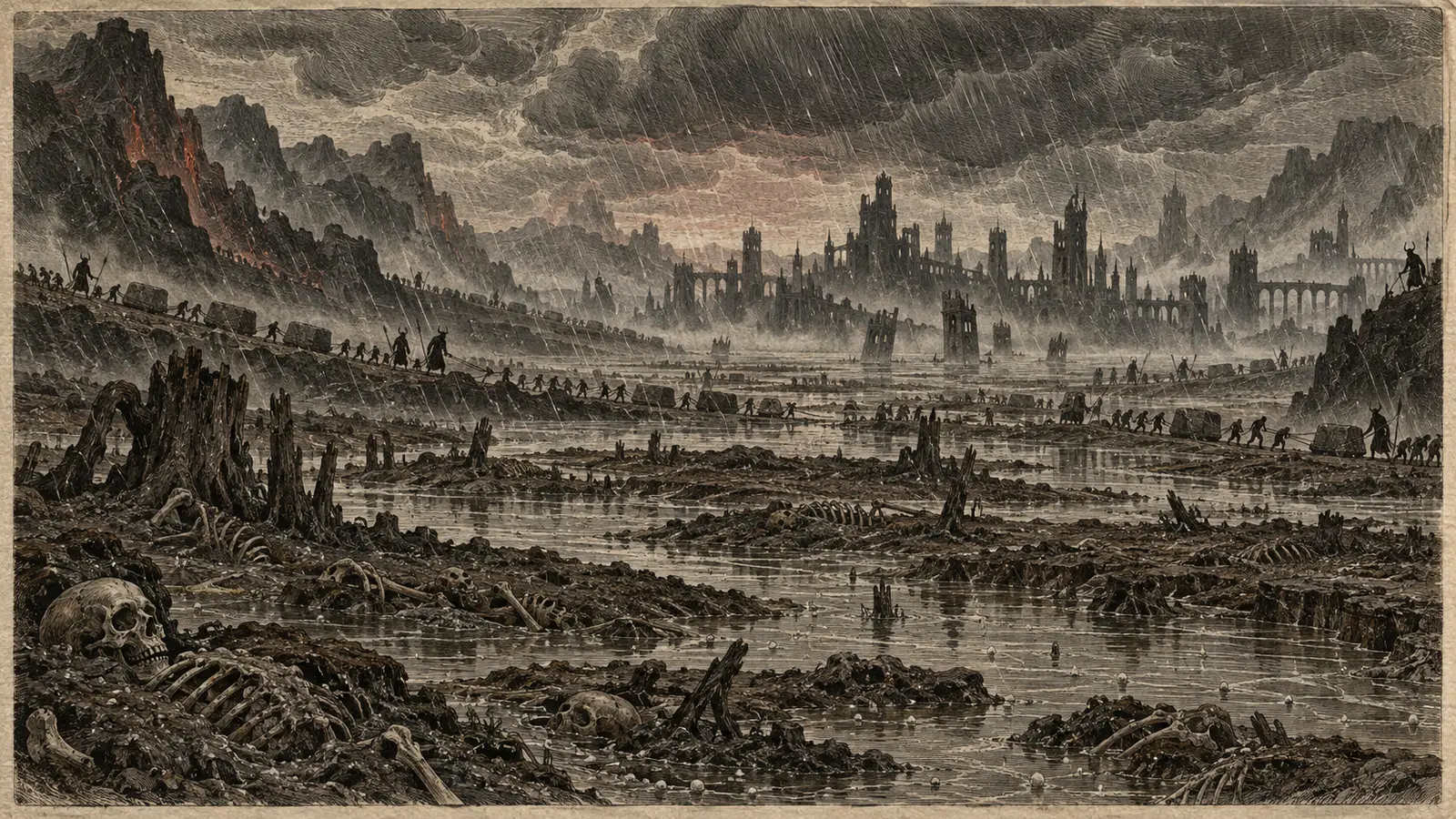
Below Dis lies Minauros, Mammon's realm, and it's a miserable place. It's an endless bog of filth, rot and bones, under rain, sleet and hail, broken here and there by ridges of black volcanic rock. There's a city there, but it survives only because thousands of slaves keep it from sinking into the mire. They are always working and always losing ground, and they're never allowed to stop. If you want a picture of greed, there it is, a city that would sink at once if the labour ever paused.
Below Minauros is Phlegethos, Belial's realm, the most classically Hellish of all. It's a country of volcanoes and rivers of liquid fire, hills of ash, smoking pits and shaking earth, where even the air seems to burn.
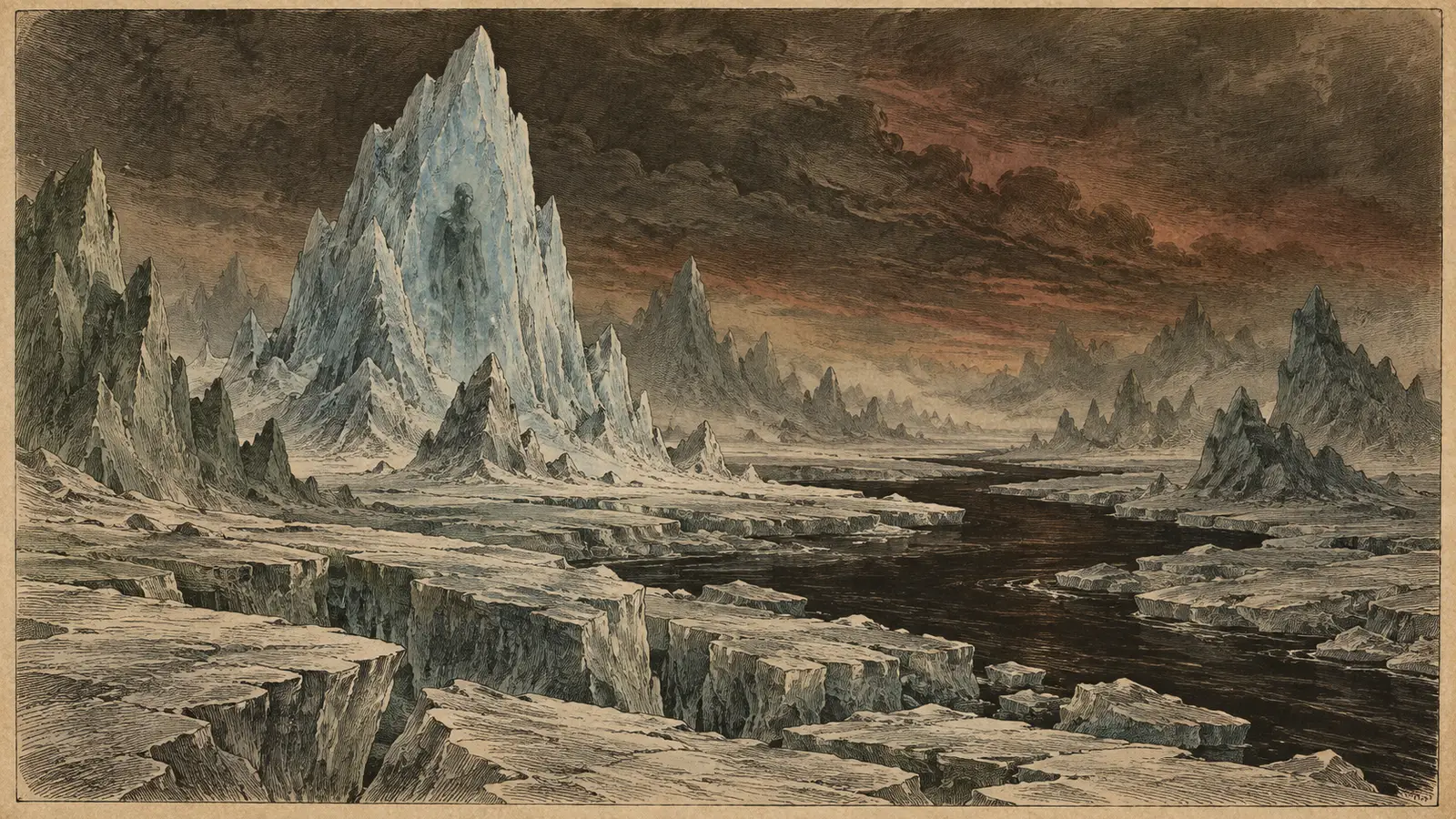
Below that lies Stygia, 's realm, which is cold. Tellings varied over the years. Sometimes it's a frozen sea crowded with vast icebergs, and sometimes a bottomless ocean under a sheet of ice as much as three miles thick. Either way it's a dark, glassy, silent place, with something moving far below.
The second part of the article, in August, went deeper still. Malbolge, the sixth layer, belonged to Baalzebul, though Moloch governed it for him as his Grand Viceroy. Maladomini, the seventh, was Baalzebul's own seat. Caina, the eighth, was Mephistopheles's, and it's colder than Stygia, a place of glaciers that move as fast as a running man and avalanches that bury everything in their path. Nessus, the ninth and lowest, belonged to Asmodeus. It's a land of impossibly deep canyons and pits, as if the whole layer were nothing but ways further down.
Greenwood also spent several pages on something that matters a great deal to adventurers: how magic changes in the Hells. Spells that work one way in the mortal world might work differently there, or fail, or twist. The Hells have their own laws, and the visitor works under them.
The article was crowded with people. Greenwood filled the layers with more than forty named devils, a whole court of dukes and princesses with titles and households. Part one gave us greater devils called Bist, Caim and . It gave us dukes such as Agares, , Gorson and , and many more, and the princesses Cozbi, Lilis and Naome. Part two added dukes such as Abigor, Barbatos, Bune, Morax and Zepar, and princesses such as Baalphegor, Baftis and , who was Moloch's consort. It gave Hell a chancellor, , and an inquisitor, Phongor. And it gave Asmodeus a queen, .
Hold on to that last name. Bensozia, queen of Hell, would later become the centre of one of the saddest and most whispered-about stories in the whole infernal history.
With Greenwood's articles, Hell stopped being a list and became a country, with cities, roads, weather, courts and rivalries. You could plan a journey through it, and a party of adventurers could stand at the top of Avernus with a map and argue about the route.
The other great lords got their characters in these years too. Baalzebul and Mephistopheles were old rivals, two powerful lords of the lower layers watching each other with long and patient hatred. Their rivalry would shape the history of Hell for decades of the game's own time.
In November 1984 Greenwood came back with a sequel, "Nine Hells Revisited." It was something of a gathering-up, with notes on outcast devils who had fallen from their places, on treasures hidden in the Hells, and on the nature of diabolical deals. It added a few more great devils. One was . Another was . And there was an archdevil called , who had once been known as . In the same issue Greenwood answered "Eight devilish questions" about devils and their Hells, the kind of patient, practical explaining he would become famous for.
Gargoth is worth remembering, because he didn't stay in his place. He'd turn up again in Greenwood's own Realms as a fallen lord wandering the world, and we'll meet him there.
One last book of the first edition gathered all of this. In 1987 TSR published the Manual of the Planes, written by Jeff Grubb. It brought together the scattered lore of the outer planes, the Nine Hells among them, and set down the lords layer by layer: Tiamat in Avernus, Dispater in Dis, Mammon in Minauros, Belial in Phlegethos, Geryon in Stygia, Baalzebul ruling Malbolge through his viceroy Moloch, Baalzebul again in Maladomini, Mephistopheles in Caina and Asmodeus in Nessus.
Grubb also solved a puzzle. Dante's Hell goes down, always down, and the Hells of the game should feel the same. But if every layer is infinite, what does "down" even mean? Grubb's answer was simple and elegant. Every gate into a layer lies on a mountaintop, and every gate out lies in a valley. So you arrive high, you must walk downhill to leave, and the next layer receives you on a summit once more. Picture a traveller passing through all nine: arriving on a peak, descending the long slopes, finding the gate in the low place, stepping through and finding themselves on another peak, with the next descent spread out below. The whole journey through Hell becomes one long walk downward.
Many years later, in 2018, the digital magazine Dragon+ ran an anniversary piece by Rich Baker looking back on those 1983 articles as the game's first great vision of adventure beyond the world, full of infernal grandeur and villains drawn in the round. By then the Hells had changed a great deal. They'd been renamed, reorganised, swept by civil war and reshaped by the bodies of fallen rulers. The first of those changes came quickly, and it came from outside the game.
Chapter IV
Baator and the baatezu
Through the 1980s, outside the game, a moral panic had been building. Some parents, preachers and campaigners had come to believe that Dungeons and Dragons was dangerous, that it drew young people toward the occult and toward harm. We'll come back to that story later, in its proper place. For now, what matters is its effect on the devils.
In 1989 TSR published the second edition of Advanced Dungeons & Dragons: a new Player's Handbook, a new Dungeon Master's Guide, and a new loose-leaf bestiary called the Monstrous Compendium. The company had been working for some years to soften the game's image, and the new core books left out demons and devils altogether. The words themselves were gone. For a little while it seemed to many players that the fiends had been cut from the game entirely, and the rumour that TSR had removed them spread far.
They hadn't gone away for good. New names were coined inside TSR, and in 1991 the fiends returned in the Monstrous Compendium Outer Planes Appendix. Devils were now the baatezu, and demons were the tanar'ri. The Nine Hells were now called . The creatures were given a new look as well, a fantasy face-lift meant to put some distance between them and the devils of real-world religion.
It's an odd thing to say about a renaming forced by outside pressure, but the change gave the lore a great deal. "Devil" is a word everybody knows and everybody brings their own picture to. "Baatezu" was a word nobody knew. It belonged only to the game, and it made the creatures strange again. You couldn't assume you understood a baatezu. You had to learn what one was.
The same 1991 book gave the fiends something even bigger. It formalised the Blood War, the endless conflict between baatezu and tanar'ri, law against chaos, across the whole of the lower planes. The two evils that had sat across the wheel from each other since 1977 were now locked in a war older than the mortal races. We'll walk through that war shortly. First, let's see how the baatezu were arranged in their new shapes.
The castes kept the old idea of promotion but gave each rank a new, stranger name. At the bottom, among the least baatezu, were the lemures, still shapeless, still the first form of the damned. Beside them stood the nupperibos, another lowly, half-formed kind, and the spinagons, small spiked devils, which is what the spined devil had become.
The lesser baatezu were the abishai, the dragon-coloured devils of ; the barbazu, which had been the bearded devils; the erinyes, who kept their old Greek name; the hamatula, which had been the barbed devils; and the osyluth, which had been the bone devils. Planescape material would later add the mezzikim.
The greater baatezu were the amnizu, the cornugon, which had been the horned devil, the gelugon, which had been the ice devil, and the pit fiend, which kept its name. Later still a rare kind called the logokron joined them.
Say those names slowly and they have an odd music: hamatula, osyluth, cornugon, gelugon. They sound half Latin and half invented, like the vocabulary of a bureaucracy in a country you've never visited.
That suits them, because bureaucracy is what the castes became. A baatezu rises by earning the favour of its masters, and it can be demoted as punishment, cast down into a lower form. Most devils never rise past the barbazu, the bearded devils, who are the great bulk of the middle ranks. Some exceptional red abishai and spinagons are allowed to skip that rank. Only a bearded devil of genuine merit becomes an osyluth. A devil can even be moved sideways across the castes, as an erinyes might be made into an osyluth, if it serves the needs of the Hells.
Imagine the career of a single soul in this system. It arrives as a lemure with no memory. Over ages, if it's lucky and useful and cruel enough, it's chosen and reshaped into a spinagon. Then perhaps an abishai, or a barbazu. Most of the time it stops there forever. If it fails, it falls back. Every step is earned through obedience and every step can be taken away, and fear holds the whole thing together as firmly as merit does.
In 1994 TSR published a new campaign setting that would make the baatezu famous. It was called Planescape, it was designed by David "Zeb" Cook, and it took the whole wheel of the outer planes and turned it into a place where adventures happened. Most of its art was by Tony , whose drawings gave the planes a rusted, organic look. His fiends were long-limbed, sharp, spiky and strangely elegant, and they defined how many players pictured the baatezu for the rest of the decade.
At the centre of Planescape, quite literally, is , the City of Doors. It sits atop an infinite spire in the middle of the Outlands, the plane at the hub of the wheel, and it's shaped like a ring with the city built on its inner surface. Every doorway in Sigil might be a portal to somewhere else, if you hold the right key. The city is ruled by the Lady of Pain, a silent, floating figure with a face surrounded by blades, who never speaks and is never worshipped, and who keeps the gods themselves out of her streets. Cook said of her, "I'm very fond of the Lady of Pain; she really locks up the Planescape look. We all liked her so much that she became our logo."
In Sigil, fiends walk the streets as merchants, envoys and recruiters. A baatezu might know your name and have a proposal for you. A tanar'ri might want a quiet word. A yugoloth might offer a contract, and the contract would be scrupulously fair in ways you wouldn't understand until much later. The Blood War, as one Planescape line put it, is always at your doorstep. It grinds on in the lower planes, spills out into the Outlands, and comes into Sigil itself as recruitment and trade and whispered offers. The Lady of Pain keeps the city neutral ground, so no army can march openly through her streets, but the war is there all the same, conducted in parlours and taverns.
There's a small, curious detail about the lords of Baator in that first boxed set. Only one of them was named: . He was also the only Lord of the Nine whose name, appearance and station came through the second edition unchanged. Every other great devil changed in some way. The Iron Lord in his Iron Tower, with his little horns and his cloven left hoof, simply stayed where he was.
In 1995 Baator got a full portrait of its own. The boxed set Planes of Law, by Colin McComb and , described the five lawful planes, and McComb wrote the book on Baator. It came with poster maps of the layers and diagrams of the hierarchies.
In McComb's telling, Baator is an inverted mountain, a great peak standing upside down with its point at the bottom. is the top, wide and open. Below it is iron Dis, then swampy , then fiery , then icy , then treacherous , then the ruins of , then the frozen waste of , with its newer spelling, and finally , the point of the mountain and the bottom of everything.
Each layer has a Lord of the Nine, and each lord has a staff of nobles, a court of dukes and lesser powers. In McComb's picture the lords themselves care surprisingly little for the Blood War or for the common baatezu. That's work for others. The lords spend their energy on two things. One is building cults among mortals on other planes, gathering worshippers and souls. The other is politics, espionage and intrigue against one another, a ceaseless, quiet war of influence fought in the courts of Hell while the real war goes on above.
The book also said something about Avernus that changed its history. "The original Lord of Avernus," it says, "not Tiamat, contrary to popular belief, found herself imprisoned and entrapped by her warlord, the pit fiend Bel, thousands of years ago."
So Tiamat had never truly been the ruler of the first layer. She dwelt there, but she wasn't its lord. The real lord was someone else, a she whose name wasn't given, and she had been betrayed and imprisoned by her own general. Bel, a pit fiend, held the layer now, drawing on the power of the lord he kept captive. He hadn't been born great either. In the tales he rose from a lowly lemure, all the way up the ladder of the castes, to the top of the first layer of Hell. Even so, Bel wasn't free. He answered to a council of pit fiends called the Dark Eight.
That unnamed prisoner in the depths of Avernus would wait a long time for her name. When she finally received it, it was , and much later still she would become one of the most important figures in all the lore of the Hells.
Chapter V
The Blood War, seen from the City of Doors
In 1996 the Blood War got its own boxed set. Hellbound: The Blood War, by Colin McComb and Monte Cook, was the last of the great Planescape boxes, and it was thorough. It held a book of secrets for the dungeon master called The Dark of the War, covering the history, strategy, magic and battlefields of the conflict; a book of what player characters might know, The Chant of the War; a book of three adventures called War Games; a book of colour art and maps called Visions of War; and even a comic, The Bargain.
Its premise is stated plainly at the start. "Since before mortals drew breath," it says, "the cunning baatezu and the fiery tanar'ri have struggled... to batter each other out of existence." The prize is the lower planes themselves.
Picture the two sides. The baatezu are discipline. They fight in ranks and formations, under officers who answer to generals who answer to lords. They plan their campaigns, they keep their supply lines, and they honour their contracts. The tanar'ri are a flood. They come in endless, swarming numbers out of the bottomless Abyss, each demon a law unto itself and each horde held together only by the strength of whatever demon lord is loudest that day. They have no order, so you can't predict them, and there are so many of them that you can't wear them down. The devils have order and nothing else. The demons have numbers and nothing else. Neither side can win, and neither side can stop.
The battlefields are mostly four. There's , the first layer of , the front door of Hell. There's the Abyss itself. There's the River , the great dark river that winds through all the lower planes and carries armies on its current. And there's the Outlands, around 's spire. Up and down those battlefields the war has moved for longer than mortals have existed.
Between the two armies move the yugoloths. These are the fiends of neutral evil, the mercenaries of the lower planes, native to the Gray Waste and to . They sell their swords to whichever side pays best and sometimes change sides in the middle of a battle. Neither devils nor demons trust them, and both hire them anyway, because each fears what would happen if the other side had the yugoloths and it didn't.
The yugoloths have their own view of the war, and it's a chilling one. They believe the Blood War is a vast experiment into the nature of evil. They believe they may have started it, and that they keep it in balance for their own benefit. Their legends even claim that their own makers, the ancient baernaloths, had them create both the baatezu and the tanar'ri in the first place. Whether any of that is true is something the yugoloths would be glad to let you wonder about, for a price.
Behind the baatezu armies stands one of the most interesting groups in all the lore of the Hells, the Dark Eight. They're a secret order of pit fiends, founded long ago under a pit fiend named . Quietly, over ages, they took command of all nine armies of Baator. The lords thought the armies were theirs. The armies' generals answered to the Dark Eight.
Each member of the Eight has an office, as befits devils. oversees supply. Corin handles espionage. Dagos plans strategy. manages relations with mortals, and Zapan relations with other immortals. Pearza oversees research and the practical work of putting it to use. Zaebos handles promotions and demotions, which means every devil's career passes, in the end, under his eye. And looks after morale, which in Hell is a delicate subject.
They are, in effect, the general staff of Hell, a council of pit fiends sitting around a table and running a war that has no end. When you remember that the lords themselves care little for the war, it makes sense that someone else should be running it. What the Dark Eight showed, when the moment came, was exactly how much they ran.
That moment was the Reckoning.
Chapter VI
The Reckoning and the Lords of the Nine
Every old kingdom has a civil war in its history, and Hell's is the Reckoning. It was told across Hellbound, the Guide to Hell that came after, and later books that retold it. It's the story of how the Lords of the Nine rose against , and how they failed.
The lords split into two factions. The first was led by of , the great wizard of the frozen eighth layer. With him stood of Dis, of and of . The second was led by , the beautiful lord of , and with him stood of and of , who was Baalzebul's own viceroy, among others.
Both factions wanted the same thing, the throne of . But Mephistopheles and Baalzebul hated each other almost as much as they resented Asmodeus. So the war wasn't simply a rebellion. It was a rebellion and a rivalry tangled together, each faction plotting against the king and against the other at the same time.
Baalzebul's side moved first, and it moved treacherously. At the last moment Baalzebul turned his army on Dis and laid siege to Dispater's Iron Tower, while Moloch and Belial struck by surprise at Stygia. The rebels weren't attacking Asmodeus yet. They were attacking each other, clearing the board before the final move.
Geryon had a secret. All this time, while he stood in Mephistopheles's faction, the great serpent-bodied lord of Stygia had been loyal to Asmodeus. With Asmodeus's help he had placed agents inside both rebel armies. When the final clash drew near, Geryon lifted his horn, the same horn the old books said could summon minotaurs, and blew.
At that sound, the pit fiend generals turned. All across Hell, the armies the lords had marched to war turned on the lords who had marched them. The Dark Eight had commanded them all along, and the Dark Eight had always been loyal to Asmodeus. The lords discovered, at the worst possible moment, that the soldiers they had counted as their own had never been theirs.
The rebellion collapsed. Asmodeus stood alone and undisputed, and what followed tells you a great deal about him. He didn't destroy the rebels, or not most of them. Asmodeus prefers useful, chastened servants to dead ones. A lord who has learned his lesson and knows he can't win is worth more on his throne than in the dust.
Baalzebul suffered most. He had been beautiful, and some later tellings say he was once an angel, an archon of the upper planes named who fell through his own ambition and was recruited by Asmodeus. Asmodeus cursed that beauty away. Baalzebul's body melted into a vast, slug-like form, and from then on he was known as the Slug Archduke. Later tellings add that he's a giant slug covered in flies, and that the curse lasts one year for every lie he has ever told to a fellow devil, which in Hell is a very long sentence. The old insult came home at last, and the prince was once again lord of the flies.
Moloch had been encouraged in his defiance by two advisers, , called the Hag Countess, and . When the war was over, Moloch didn't bow low enough. He was cast down and exiled from Malbolge. The Hag Countess, the very adviser who had urged him on, took his place as ruler of the sixth layer. That's a lesson in Hell's politics too: an adviser's counsel can bring down her master and lift her into his seat.
Mammon grovelled at once and betrayed his fellow plotters to save himself, so he kept his place in the bog.
Geryon's reward was strange. He had been loyal, and loyalty in Hell is rewarded, but not always in the way you'd hope. Some time after the Reckoning he was removed from Stygia. In the second edition's telling he simply faded into obscurity. The great beast who had blown the horn that won the war ended his days wandering, a lord without a layer.
Stygia went back to its former ruler, and here we return to the queen of Hell, . Long before the Reckoning, Stygia had been ruled by a lord named . Levistus had murdered Bensozia, Asmodeus's own consort. For that crime Asmodeus imprisoned him in an iceberg in Stygia, frozen in place, and raised Geryon to rule the layer in his stead.
The tales of that murder are whispered in Hell in more than one way. In the main telling, Levistus asked Bensozia to help him overthrow Asmodeus and become his own consort instead. She refused, and he killed her and her pit fiend bodyguards. But there's another story, told more quietly, in which Bensozia was secretly Levistus's lover and the two were plotting together. In this version their daughter discovered them and cut her own mother's throat, and a devil named Martinet killed the witnesses and laid the blame on Levistus. Which is true is the kind of question one doesn't ask aloud in Nessus. Either way, Levistus went into the ice.
After the Reckoning, Levistus was given his old layer back, but not his freedom. He rules Stygia from inside the iceberg, frozen and still, his will reaching out through the cold to the servants who carry out his orders.
Phlegethos changed hands too, though gently. It came to be ruled jointly by Belial and his daughter, Lady , the archdevil of the burning layer sharing his throne with his child.
The second edition of the game came to a close with one last great book on devils. In 1999 TSR published the Guide to Hell, written by Chris Pramas. It gave full statistics for every Lord of the Nine and told the secret history of Hell and of Asmodeus. It offered new paths for heroes who would make devils their business: the Devil Slayer, who hunts them; the Thaumaturgist, who summons and bargains with them; the Inquisitor, who roots out their cults; and the Hellblade, a warrior bound to infernal steel. It added spells and items and a way for priests and paladins to drive devils back with their faith.
And it set out the lords as they stood after the Reckoning. Bel held . Dispater held Dis. Mammon held Minauros. Belial and Fierna held Phlegethos together. Levistus held Stygia from his iceberg. The Hag Countess held Malbolge. Baalzebul, now the slug, held Maladomini. Mephistopheles held Cania. And Asmodeus held Nessus and all the rest.
The Guide to Hell did one more quiet thing. It gave a name to the prisoner of Avernus, the original lord whom Bel had betrayed and caged. Her name was . She appeared then as hardly more than a name in the dark, a fallen ruler kept in the depths of a fortress, and nobody yet knew how much of the Hells' future would turn on her.
That same year a very different work showed what felt like from the inside. Planescape: Torment, made by Black Isle Studios and released in 1999, is a computer game about an immortal man called the Nameless One, who has died and woken again so many times that he has forgotten who he is. In its pages Baator is described in a long breath of names: "the Big One, the Nine Hells, the Pit of Darkness, the Stinking Mire," the plane of the most dangerous evil there is, home of "fiends of unsurpassed power."
One of the gentlest and strangest devils in all the game's history lives in Torment. His name is Forked-Tongue, and he's a cornugon, a horned devil, living in a house in the Outlands. Long ago Fhjull made a deal with a fallen deva named . You'd expect the devil to have cheated the angel. It went the other way. Trias cheated Fhjull, and now the devil is bound by the terms of that bargain to do good deeds for anyone in need. For a devil this is a kind of exquisite torture. Every kindness he does is forced on him by a contract, and he does it through gritted teeth, calling Trias "the Betrayer." When the Nameless One comes to him for help, Fhjull has no choice but to give it.
Fhjull sends the Nameless One to the Pillar of Skulls in Avernus. It's a vast column of skulls and writhing flesh, made from those whose lies brought others to their deaths. Each skull still holds what it knew in life, and together they know a great deal. The Pillar answers questions, but always in exchange for a sacrifice. The Nameless One's companion, , a floating, talkative skull, once belonged to it. There, among the murmuring skulls in the red light of the first layer of Hell, the Nameless One learns where his mortality lies.
Another figure in Torment carries a quieter story of Baator. Fall-From-Grace is a succubus, a fiend of the lower planes, who has chosen to be chaste and lawful and who keeps a house of the mind in , a place devoted to conversation and ideas rather than the body. Her own mother sold her to the baatezu as a slave. She won her freedom from a cornugon master over a very long time and by very unusual means: she out-thought him, meeting his hunger for wit and talk as no one ever had. Even the slaves of Hell, it seems, can sometimes find the loophole.
Chapter VII
The devil returns by name
In 2000 a new company held the game. Wizards of the Coast had bought TSR, and it published a third edition, rebuilt from the ground up. With it came a small but meaningful change. The old words came back.
By then the panic of the eighties had faded and people had grown more relaxed about the hobby. So in the new Monster Manual devils were called devils again and demons were demons. But the second-edition names weren't thrown away. Players had spent a decade with baatezu and tanar'ri and had grown fond of them, so the books kept both. Each devil was listed under the heading "devil," with its infernal name beside it, and "baatezu" became the name of a race within the devils, a subtype that covered most of them and every archdevil. The plane was still , but it was spoken of as the Nine Hells of Baator.
The third edition gave devils a common nature you could count on. They're immune to fire and poison. They resist acid and cold. They see clearly in the dark. Whatever their caste, the fires of their home don't touch them. And the Blood War with the tanar'ri carried on, unchanged in its endlessness.
The 2000 Monster Manual held nine devils, from the lowly lemure up to the pit fiend, including the barbazu, the hamatula, the erinyes, the cornugon and the gelugon. In 2003 a revised version of the rules, known as three and a half, brought a revised Monster Manual, and it listed eleven devils, each with its plain English name first and its infernal name after: the barbed devil, or hamatula; the bearded devil, or barbazu; the bone devil, or osyluth; the chain devil, or kyton; the erinyes; the hellcat, or bezekira; the horned devil, or cornugon; the ice devil, or gelugon; the imp; the lemure; and the pit fiend.
The lemures were described with a touch of grim poetry, as "living piles of rotting flesh that look like puddles of pink skin." The chain devil we'll meet properly later, because it has a history of its own.
The abishai were 's still. In the lore of this era the dragon goddess had made them, a breed of baatezu in her own five colours.
In 2001 a new Manual of the Planes, by Jeff Grubb, Bruce R. Cordell and David Noonan, set the cosmos out for the new edition, with Baator in its place among the outer planes.
In October 2002 came a darker book. Monte Cook's Book of Vile Darkness was written for games that went deep into evil, and it gave the archdevils full statistics. In the world of the game the book has a history of its own: there's an artifact also called the Book of Vile Darkness, a tome of the foulest knowledge, and had a hand in writing it. The slug lord of , the one who'd been beautiful, contributed his chapter to the darkest book in existence.
The lords it listed were the lords of the Guide to Hell, unchanged. There was Bel, Lord of the First; , Lord of the Second; , Lord of the Third; and , Lord of the Fourth; , Lord of the Fifth; the Hag Countess, Lord of the Sixth; Baalzebul, Lord of the Seventh; , Lord of the Eighth; and , Lord of the Ninth. Cook made one small change worth noticing: he gave Dispater skin of iron. The Iron Lord had become iron himself.
These were quiet years for the Hells, years of keeping things as they were and setting them in order. The great reshaping of the third edition came near its end.
Chapter VIII
The tyrants of the Nine Hells
In December 2006 Wizards of the Coast published Fiendish Codex II: Tyrants of the Nine Hells, written by Robin D. Laws and Robert J. Schwalb, with a painted cover by Raven Mimura. Earlier that year a companion book, Fiendish Codex I: Hordes of the Abyss, had done the same work for demons. This second book was meant to be the definitive book on devils and their Hells.
It looked at everything. It covered devil society and the infernal economy, and how souls are harvested and spent. It explained how devils regard demons and where devils come from. It walked through the geography and politics of every layer. It gave players a race called the Hellbred, mortals whose souls had already been damned and who'd been given a second chance in a new body to earn their way out. It gave feats for heroes touched by devils, and prestige classes such as the Hellbreaker. And it gave monsters, and finally the Lords of the Nine themselves.
At its heart was a story about the beginning of everything.
It's told in the book as myth, the kind of story that shifts a little with each telling, and that suits it. In the beginning, was a servant of the lawful gods. In some tellings he was an angel, "the bravest, toughest, fiercest and most beautiful of angels." The gods had made him and others like him for one purpose: to fight the demons of the Abyss. The demons were a threat to everything, and the gods were busy. They had worlds to make and mortal races to bring into being. So they made a host of warriors to hold the demons back while they got on with the work of creation.
Asmodeus and his host fought the demons for a long time, and they fought well. But fighting demons is hard, and to fight them better the angels changed. They took on fiendish traits. They grew horns and claws, learned cruelty, and became more like the things they fought. The gods saw this and were troubled, and they put Asmodeus and his host on trial.
Here the story becomes, of all things, a courtroom drama. Asmodeus stood before the gods and made his argument. War is dirty work, he said. We have done your dirty work for you, so that you could keep your hands clean. And throughout all of it, we have upheld your laws. Every one of them.
The gods couldn't answer him. He understood their laws better than they did, and on the law he was right.
So began a long series of what you might call lawsuits. Asmodeus came back to the gods again and again, argument by argument, and each time he won a little more: more rights, more privileges, more room in the law for himself and his host. In the end it all came to a single document, the Pact Primeval, sometimes called the First Contract.
Under the Pact Primeval, Asmodeus and his followers received the realm of , which was then empty and abandoned. The gods feared that the Blood War might spill over into the mortal world they'd made, so Asmodeus agreed not to breach the barrier between the planes. In return he received a right: to lawfully claim the souls of evil mortals, bring them to Baator, and draw power from them to fuel the war against the demons. Devils could take souls that had been corrupted, and the corruption of souls became, in law, their business.
Some tellings say Asmodeus tricked the gods into signing. Later the gods discovered something they hadn't expected. Mortals could still call devils into the world, invite them in, bargain with them and be tempted by them. The devils didn't need to breach any barrier, because mortals would open the door for them. The gods came to Asmodeus and complained that he had broken the terms.
He answered them calmly, in four words. "Read the fine print."
That's Asmodeus, in one line.
Three copies of the Pact Primeval are said to exist. One is kept in , a citadel built of copper. Another is held in , the plane of perfect clockwork order. The third is on Mount Celestia, the plane of lawful good. Three copies sit in three lawful places, each one a reminder that Hell's right to souls was granted by the gods themselves, in writing.
The book says something about what devils are made of, too. Some devils descend from the angels who fell with Asmodeus. But most were made from mortal souls, the damned brought to Baator under the Pact, punished and then remade, rank by rank, into the army of Hell. Every lemure was a person once.
And there's one question the book deliberately leaves open: how did Asmodeus come to the Nine Hells at all? The myth tells of the trial and the Pact, but the moment of arrival is left in shadow. Some mysteries are better kept.
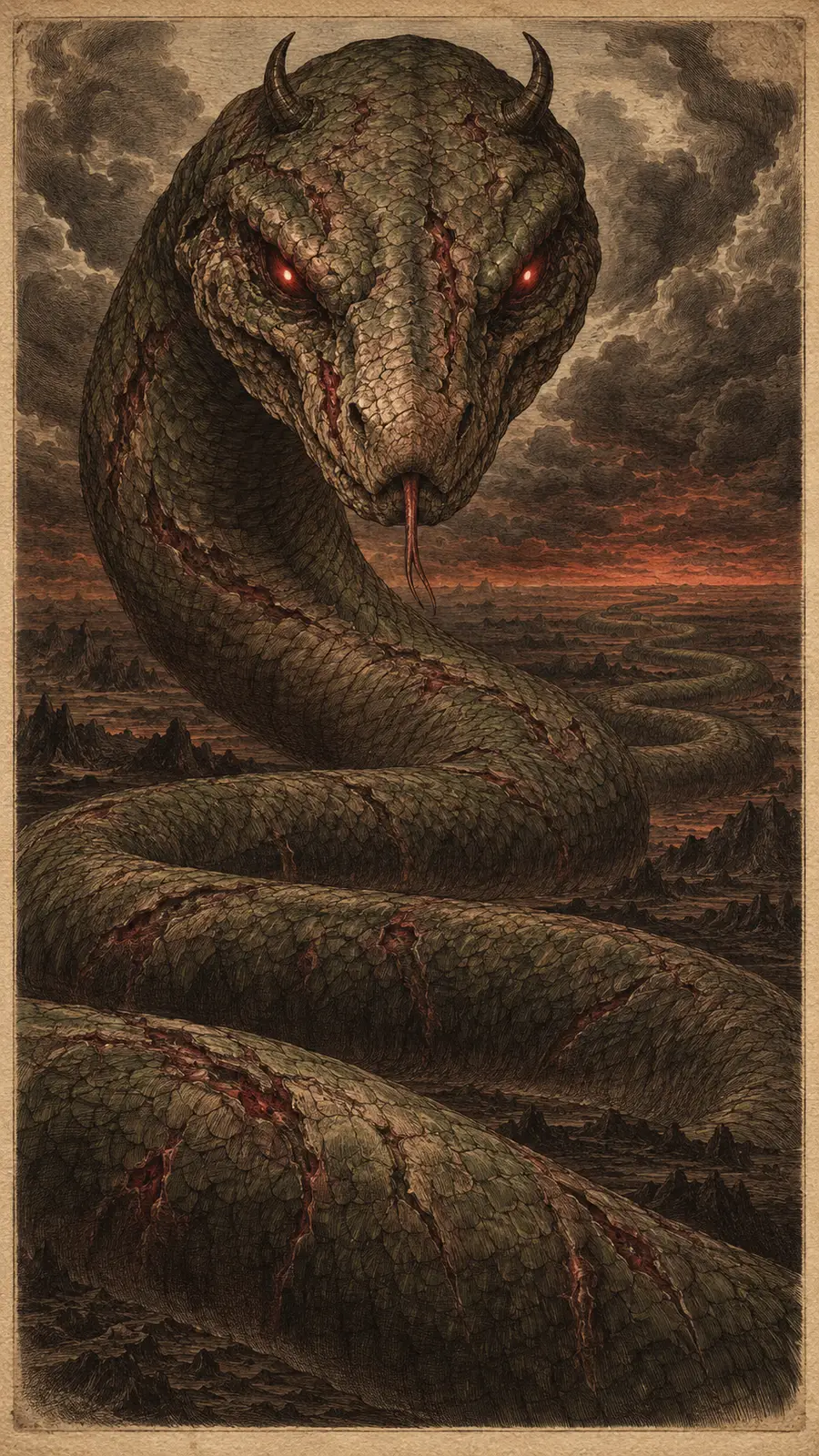
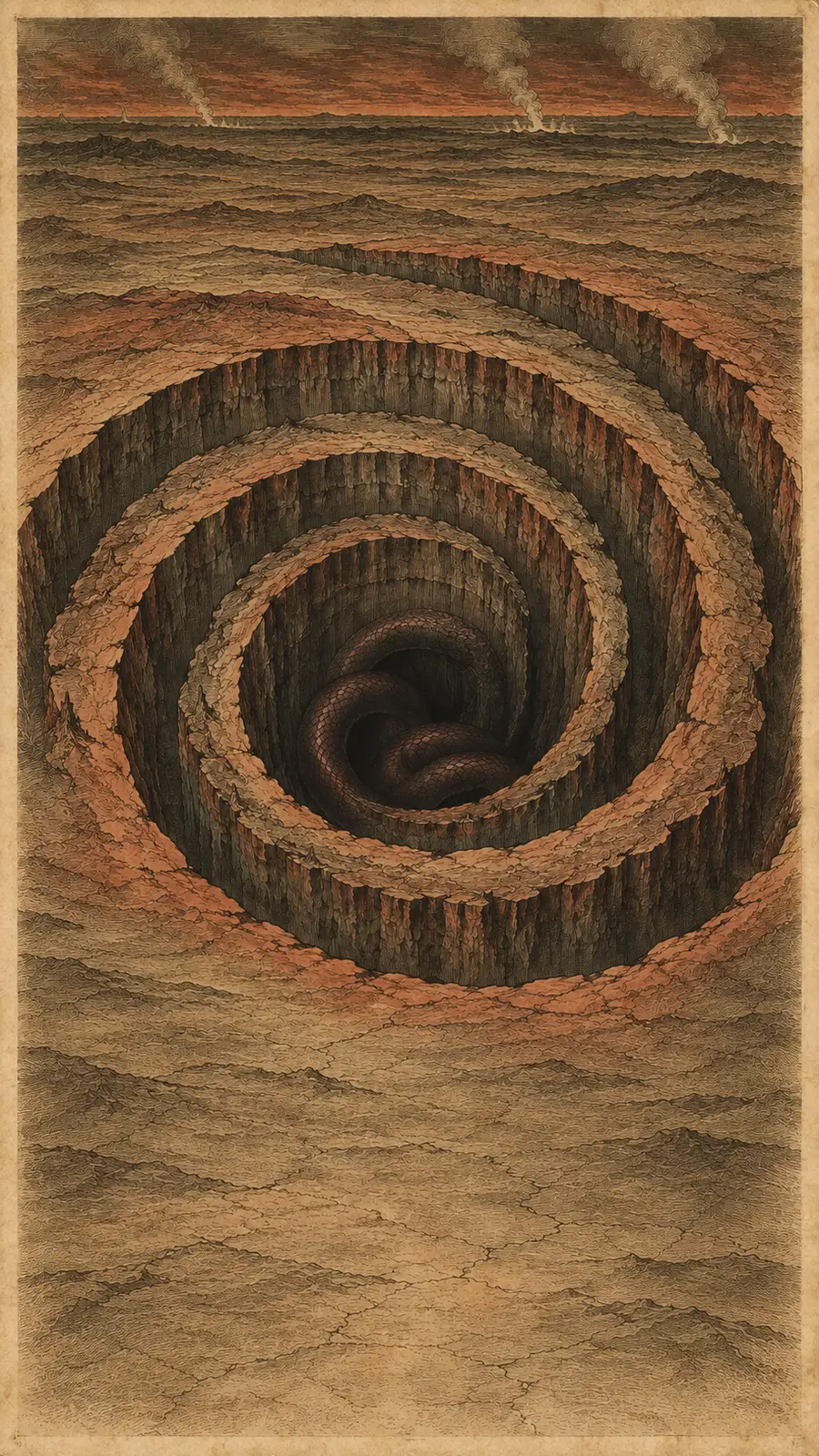
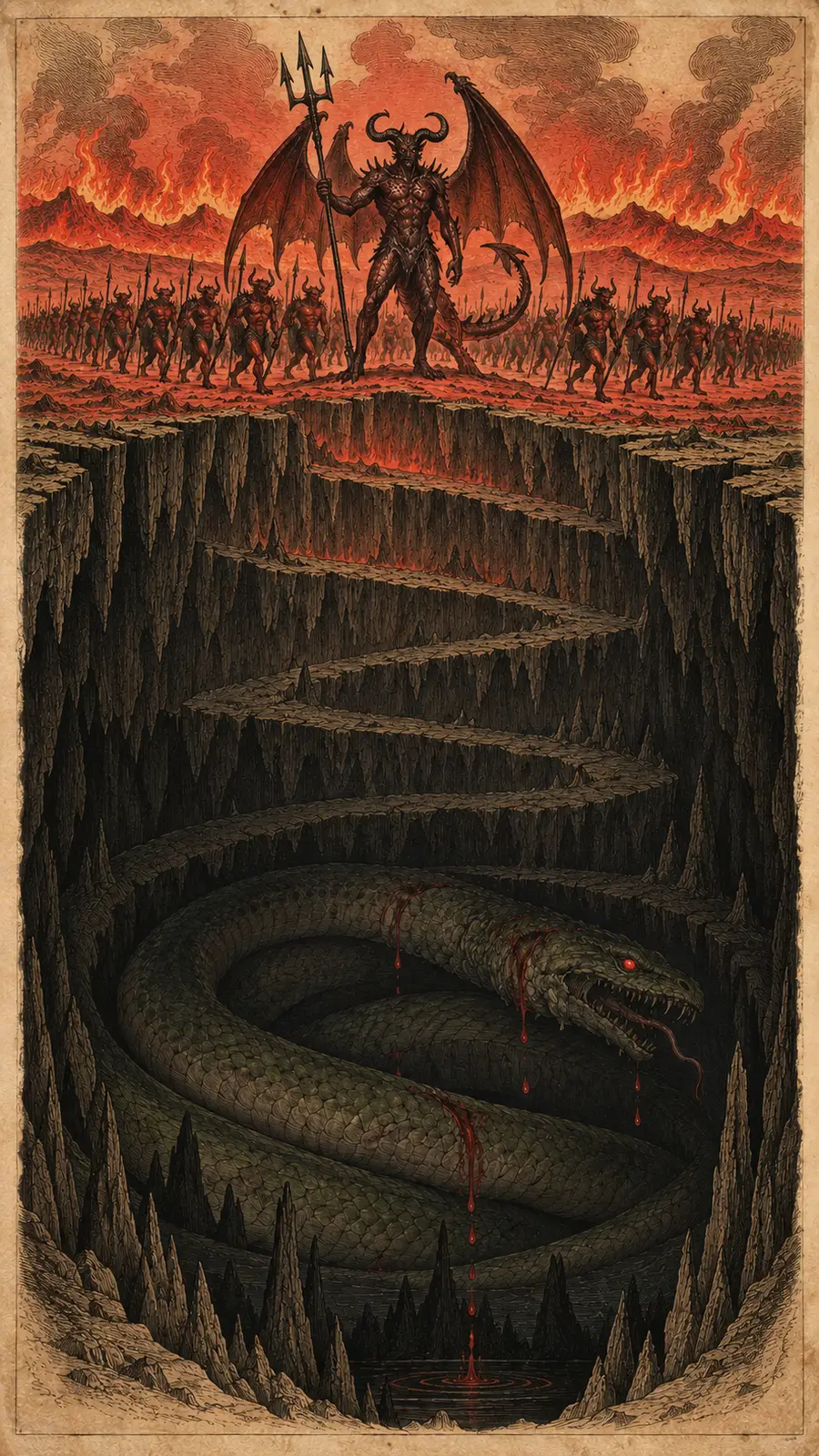
The book also revealed what Asmodeus truly looks like, and it isn't the handsome thirteen-foot figure with the ruby rod. That figure is an avatar, one of several shapes he sends out to be seen. His true form is a serpent, vast beyond imagining and hundreds of miles long. He lies in a place called the Serpent's Coil, a rift in about a mile wide that spirals inward for hundreds of miles and goes down five miles to the lowest point in all of Nessus, the lowest point of the Hells.
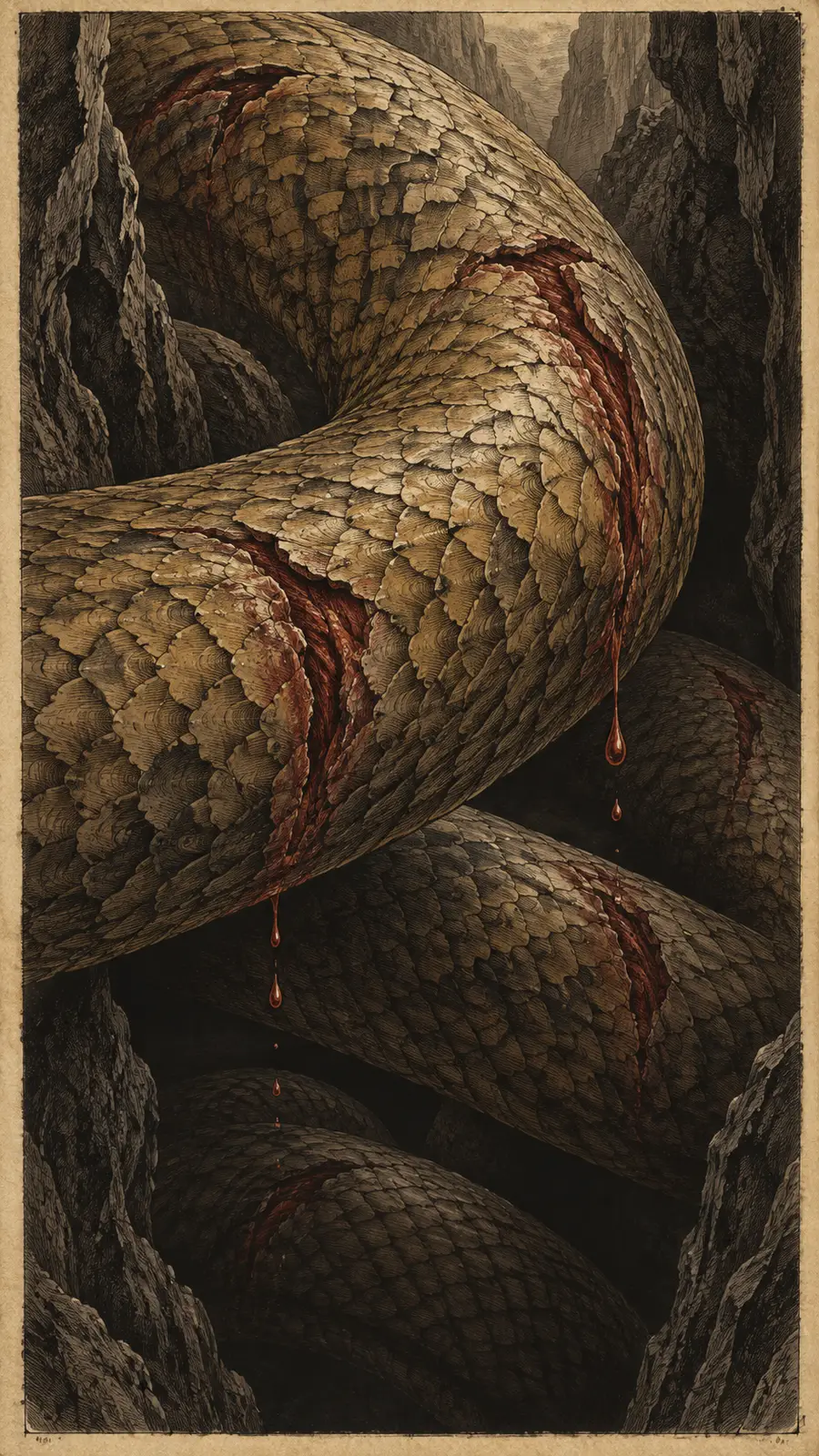
He's wounded. The wounds came from his fall from the upper planes, and they have never healed. Every day they ooze blood, and when a drop of that blood touches the ground it grows into a devil, a powerful one, a pit fiend or a horned devil. Armies spawned from his blood patrol Nessus.
Almost no one has seen this form. Even among the Lords of the Nine, few have looked on it. They meet the avatars, the handsome figures with the rod, and they bow to those. Far below, the great wounded serpent lies coiled in the dark and bleeds out new soldiers, one drop at a time.
Above the Serpent's Coil stands his fortress, , a vast citadel in the deepest rift of Nessus, the seat of the king of Hell.
The book also changed one layer completely, and it's the strangest change in all the history of the Hells.
, the sixth layer, had passed to the Hag Countess after the Reckoning, the adviser who'd taken 's seat. In the older picture Malbolge was a place of piled obsidian blocks over lava. But the Hag Countess wasn't content to rule a layer. She wanted to become a god. She tried, and she failed. Her body swelled, and kept swelling, enormous and impossible, until it split open, and the whole layer was changed. Malbolge is now made of her. Its slopes are her bones and innards, a landscape of rubble and boulders that were once the body of its ruler. You walk across her.
A new ruler took the layer: , daughter of Asmodeus, called the Lady of the Sixth. She's the princess who first appeared in 's preview in 1983, and in the whispered version of the old murder, she's the one who killed her own mother.
In the book kept as Bel's prisoner. She's held deep within the Bronze Citadel, the great fortress of the first layer, where abishai torturers cut away pieces of her flesh to feed their master. Bel draws ever more of her power into himself, but he still holds his post at the pleasure of the Dark Eight, the pit fiend generals of the Blood War, who keep their base in Avernus and hold the rank of general rather than duke.
Let's walk down through the layers once more, as this book drew them, because each one is a world of its own.
Avernus is a charred waste of rubble under a red sky, where great fireballs streak overhead. The iron towers of the dukes stand over it, and the Bronze Citadel is a fortress city crammed with troops and war machines. It's the front line of the Blood War and it looks like one.
Dis is still the Iron City, now also called the City of Pain, the largest and best-known city in all of Baator. It's a maze in which you could walk forever and get nowhere, iron streets turning on iron streets, every road leading only to more city.
is still the bog, and its one city is still sinking into the muck. Gangs of petitioners and slaves haul volcanic rock to shore it up and rebuild its streets, and the swamp takes it back as fast as they build.
is volcanoes and rivers of magma, with lava pouring from caverns overhead. and his daughter rule it from Abriymoch, a basalt palace called the Mount of Leaping Flames, which sits in the caldera of a dead volcano.
is a frozen sea scattered with islands, with the River cutting through the ice. Somewhere in it stands the iceberg that holds .
Malbolge is the Hag Countess's body, ruled now by Glasya.
is a layer of dead and ruined cities spread across empty desolation and plagued by swarms of flies. rules it from his fortress, , a slug among ruins.
is a layer of living cold and moving glaciers, ruled by , Hell's greatest wizard, from his citadel .
And Nessus is the rifts and the pits, Malsheem, and the Serpent's Coil.
The book brought new soldiers too. The merregon, or legion devil, is the rank and file of Hell's armies. Merregons are faceless and identical, and when they fight in groups they share their vitality as one pooled reserve, so that wounding one draws on the strength of all. There was the narzugon, an infernal knight. And there was the amnizu, a short, stocky, winged devil who guards the gates of Hell.
A few years before that book, in 2004, a new kind of hero had come into the game, one who would carry the Hells into countless player characters. In Complete Arcane, Richard Baker introduced the warlock: a spellcaster who didn't study or pray, but who had gained magic through some dark source, some pact or inheritance. The warlock's power came as "invocations," sinister gifts, and an eldritch blast of raw force. The warlock's deeper ties to the Hells would grow in later editions, and we'll follow them there.
Fiendish Codex II was well received, and for many players its picture of the Hells, with the trial of the angels, the Pact Primeval, the bleeding serpent and the body of the Hag Countess, became the Hells. But only two years later the game changed again, and the story of where devils came from was told in a very different way.
Chapter IX
The god in the Astral Sea
The fourth edition of Dungeons and Dragons came in 2008, and it rebuilt the cosmos.
The great wheel of outer planes, the sixteen worlds turning around the Outlands and , was set aside. In its place came what was called the World Axis. The mortal world lay in the middle. Above it lay the Astral Sea, a silvery, endless ocean of thought and divinity, and floating in that sea were the dominions, the realms of the gods, like islands in a calm. Below the world lay the Elemental Chaos, a churning realm of raw, unformed matter. The Manual of the Planes of December 2008 set it out.
The Nine Hells became one of those dominions. It floats in the Astral Sea, and it has a resident god, . The nine layers remained, down to , and the book spoke of Dis as "the Second Hell," with still its lord. The archdevils still ruled their layers, but now as vassals holding domains granted by a divine king. And because a dominion is a place in the sea rather than an infinite plane, the Hells were no longer quite infinite. They were vast, but they had edges, which is a strange thing to imagine: somewhere out there, the last of the iron streets of Dis comes to an end.
Asmodeus had become a god in the full sense. The fourth edition's core books set him in the pantheon beside Bane, , Lolth, , Gruumsh and others, the evil gods. He was the god of tyranny and domination, and his teachings to his followers were simple and cold. Seek power over others. Repay evil with evil. Show no pity. Across every edition he's remained the strongest, most cunning and most handsome of devils, and now he was divine besides.
How he became divine is the heart of fourth-edition devil lore, and it's a darker story than the trial of the angels.
In primeval times, long before mortals, Asmodeus was an angel, an exarch in the service of a god. That god was a god of good and peace. His name is lost. The few who speak of him at all call him He Who Was, and some suggest he may have been the god who made humankind.
Asmodeus gathered an army of his fellow angels. He led them in revolt against their divine master, and he murdered him. In the killing, Asmodeus took the god's power into himself, and so he became a god.
But the dying god spoke. With his last words he laid a curse on Asmodeus and on all who had followed him. The rebel angels twisted in form. Their beauty broke into horns and scales and claws, and they became the first devils. That's how the fourth edition tells it: devils are fallen angels, every one of the first of them.
The dying god's words did one more thing. They turned Asmodeus's own dominion into a nightmare, the Nine Hells, and bound the new devils to it. The Hells became their prison. Ever since, the devils have schemed to escape it through lies and corruption, reaching out from their prison into other worlds and drawing mortals in, seeking always more power.
And the devils did one thing more. They erased all knowledge of the slain god's name. Not one scrap of it remains, because they fear that even speaking the name aloud might bring him back. So he's only He Who Was, a god defined by being gone. Somewhere in the silences of the Nine Hells, perhaps, is the shape of a name that nobody dares to remember.
You can hear Dante's Lucifer in this story, the most beautiful angel cast down into the ice, and you can hear Milton's rebels waking on the burning lake. The game had come round, after thirty years, to one of the oldest of all the infernal stories.
The fourth edition separated devils and demons more sharply than ever before. Devils came from a celestial betrayal in the Astral Sea, above. Demons came from below. The Abyss lies at the bottom of the Elemental Chaos, and it grew from a seed of evil planted there by , the Elder Elemental Eye, an imprisoned god of annihilation. Devils were fallen order, and demons were corrupted chaos. Each had its own origin and its own place, and the Blood War, though it didn't vanish, was no longer the great organising theme it had been in Planescape. Devils were more interested in getting out of their prison than in fighting a war.
The ranks of devils in the fourth-edition Monster Manual were familiar, with lawful schemers from the wretched imp-like creatures at the bottom up to the godlike lords at the top: the bearded devil, the bone devil, the chain devil, the ice devil, the imp and the pit fiend. The legion devils were there too, the disciplined rank and file, fighting as one body.
A series of articles in the Dragon and Dungeon magazines of this era profiled the lords one at a time, under the title "Codex of Betrayal." It began with , Prince of Imps, and , the Butcher of Nessus, two new infernal dukes created for this edition by Ari Marmell. Then came , the Broken Beast, the old serpent lord now fallen and diminished; , Prince of ; and , Princess of the Nine Hells.
The fourth edition gave the Hells one more great story, and it changed a whole people.
In the default world of fourth edition, a land of scattered points of light in a dark world, there had once been a great human empire called . Its nobles were obsessed with power, with getting it and above all with keeping it. The devils of the Nine Hells sent those nobles dreams. In the dreams the devils described a ritual, grisly and lasting a full month, that would extend the nobles' rule into eternity. Then the devils came in person, and the nobles gladly made pacts with them.
The pacts did what they promised, after a fashion. The nobles of Turath and their bloodlines were changed. They grew great horns and tails and sharp teeth. They became tieflings, and their descendants have carried the mark ever since.
Bael Turath expanded until it met another empire, , the realm of the dragonborn, founded by followers of the platinum dragon in the arid south. The two empires went to war, and the war went on so long and so terribly that it ruined both. Bael Turath won, in the end, and its victory left it in ruins too. The tieflings scattered, distrusted exiles in every land, and some of them came to a frontier valley called the Vale as ragged refugees, carrying the horns their ancestors had bargained for.
That's the story of a pact that kept its promise to the letter. The nobles wanted their rule to last forever, and their blood does last, in a scattered people who never asked for it.
Chapter X
Devils in Faerûn, Greyhawk and Eberron
While the editions changed above them, the great settings of the game told their own stories of devils. Let's turn now to the worlds themselves, beginning with the one that had given the Hells their names.
In the Forgotten Realms, Ed Greenwood's world of , the Nine Hells of are ruled by , with an archduke on each layer reporting to him. is his great rival there, the brilliant, cold lord of , forever patient and forever watching his king.
Greenwood's old archdevil , the former of the 1984 article, found a home in the Realms under a new name: . He has many titles, and they tell his story by themselves. He's the Tenth Lord of the Nine, the Lost Lord of the Pit, the Hidden Lord, the Outcast and the Lord Who Watches. He had been an archdevil of Hell and was cast out of it. He wandered the mortal world, and there he found the cult of a dead demon, Astaroth. He took up the dead demon's mantle and received the worship of its cultists, and that worship gave him his first taste of godhood. He became a demigod of Faerûn, a god of betrayal and political corruption, with a church of his own.
But a god of betrayal is hard to trust, even for his allies. Gargauth joined an alliance of dark gods who invaded the Hells to take them from Asmodeus. The invasion failed, and Gargauth was captured. Asmodeus offered him a choice, as Asmodeus always does: utter destruction, or a pact. Gargauth took the pact. He was bound into a shield, the Shield of the Hidden Lord, an artifact of Faerûn that holds a fallen archdevil whispering inside it. The Lord Who Watches, who once dreamed of thrones, now watches from the face of a shield.
The Hells have a door in Faerûn too, and it lies on the Sword Coast North, at Dragonspear Castle. The castle was built in the Realms' year 1255, by the old reckoning the Dalesfolk use, by an adventurer named Daeros Dragonspear, said to be half-dwarf, around the lair of his dragon ally Halatathlaer. In later years portals were opened beneath it. A mage named Ithtaerus Casalia began its ruin by making one, and others came after him, the among them. The defenders fled, and lesser creatures moved in. By the year 1354, devils held the castle. In the words told of it, "a portal beneath the castle belched out countless devils and other filth from the Nine Hells to terrorise the lands." The name of Dragonspear became a byword for evil. In 2016 the castle became the setting of Siege of Dragonspear, an expansion to the old Baldur's Gate computer games made by Beamdog.
The Realms also tell how Asmodeus became a true god in their own history, and it's a story of long patience. In the year 1358, a coven of warlocks called the Thirteen worked a great ritual. It marked every tiefling on the world of Toril with the mark of Asmodeus, rewriting their ancestry so that every one of them traced back to him, whatever their true descent. The idea was to make him the god of a whole people and so lift him into full divinity. Then, in 1385, came the Spellplague, a catastrophe that tore through the Realms' magic. In it, the divine realm of , the god of wizards, was destroyed, and the dying god fell into . Most people believed that Asmodeus killed Azuth and consumed his divine essence, and that this made him a true god. The truth was stranger. The two had fused, sharing one body, with Asmodeus usually in control and Azuth sleeping within. In later years Azuth stirred and chose a mortal champion of his own, and the struggle inside that shared body threatened the order of the whole Nine Hells. In the end, it's told, Asmodeus let Azuth go and took the divine spark of another, older god, of ancient , in his place.
Faerûn's novels took readers into the Hells as well. In 2001 Ed Greenwood published Elminster in Hell, the fourth book of his series about , the old sage of . A collision between powers tears reality and opens a rift between Toril and . Elminster tries to close it, to stop devils pouring through, and is captured by the outcast archdevil , one of the great devils from Greenwood's 1983 articles. Nergal wants something particular: Elminster's memories of the Silver Fire, the raw magic of the goddess , so that he can use it himself. So he takes the old wizard's mind apart, memory by memory. The book is built out of those memories, one story after another, each stripped from Elminster by the devil. Between them come short exchanges in the dark, in which the captive old mage mocks the archfiend going through his head. In the end Mystra sends her most powerful servants to bring him home.
Ten years later, in 2011, Erin M. Evans began a series called Brimstone Angels. It follows twin tiefling sisters, Farideh and Havilar, who were abandoned at birth and raised by their adoptive father, Mehen, a dragonborn, in a remote village. Farideh makes a warlock's pact with a devil named , who gives her power. The three go to Neverwinter as bounty hunters and are drawn into a far-reaching plot involving Asmodeus himself. Over six books, ending with The Devil You Know in 2016, the story follows Farideh and her devil through the long and tangled consequences of that one bargain, and of what a pact means when both sides keep watching each other.
's own world, Greyhawk, had its devil-worshippers too. In the north of the lay a realm called the Horned Society, and its early descriptions put it simply: "Deviltry is the religion of the Society." It was ruled by thirteen Hierarchs from the city of , and they also revered Nerull, the god of death. In Gygax's novel Artifact of Evil, the Dukes of Hell send legions of servants to aid the Hierarchs' masters, because their cause is one with Nerull's. A cult of Asmodeus also moves through the Flanaess in Gygax's tales of Gord the Rogue, its members marked with the tattoo of a red ruby, the symbol of Asmodeus and his rod.
The Horned Society fell. Its neighbour was Iuz, the demigod of the north, a cambion of the Abyss, son of the demon prince and the witch . Iuz was demonic, not devilish, and in Greyhawk he stood as the chaotic rival to the Society's lawful deviltry. He conquered the Society, and Molag fell, one of the great turning points of that world's history. One tale says a Hierarch survived and found himself trapped in the Abyss. From there he called out to the Nine Hells, and answered. The Hierarch swore allegiance to Hell, and the forces of Baator came to rescue him. The Blood War, it seems, reaches even into the politics of the Flanaess.
Then there's , Keith Baker's world, first published in 2004, and Eberron does things differently. It has no Nine Hells at all. In Eberron, devils are immortal spirits who embody ideas, each one an incarnation of something about the plane it belongs to. Baker explained that you might meet a pit fiend in , a pit fiend in and a pit fiend in , and none of them would look alike. The pit fiend of Shavarath is a spirit of war, in heavy armour engraved with burning runes. The pit fiend of Fernia, the plane of fire, is a spirit of flame, a figure of shadow wreathed in fire.
Shavarath is the Battleground, the plane of eternal war, and it's Eberron's answer to the Blood War. Its devils embody tyranny and cruelty, the war fought to conquer and enslave. Its archons embody courage and hope, the just war. They fight forever because war is what that plane is, and they don't recruit mortals any more than the fiends of Fernia go about lighting fires in the world.
Eberron's own native fiends are older and stranger. They're the Overlords, the rakshasa rajahs, the first children of Khyber, the dragon below. They ruled the world in the Age of Demons, until the couatls gave their lives to bind them in the depths. They can't be destroyed, only bound. One of them is Sul Khatesh, the Keeper of Secrets, who is lawful evil, a power of hidden knowledge. A loose alliance of fiends called the Lords of Dust works to free them, and among its council is Korliac of the Gray Flame, a mad pit fiend who once belonged to Fernia.
Devils came into the computer games of these years as well. In Neverwinter Nights: Hordes of the Underdark, made by BioWare in 2003, a drow ruler called the holds a pact that gives her control over Mephistopheles himself. She orders him to kill the captive hero. Instead he frees the hero, and the hero kills the Valsharess, which seems for a moment like a gift. Then Mephistopheles reveals what he had wanted all along: with her gone, her armies are his, and he means to use them to conquer the surface and make it into another Hell. He kills the hero, and the hero's soul is kept. The last chapter of the game takes place in Cania, the frozen realm of Mephistopheles, among the glaciers.
And in 2020 the online game Neverwinter opened a module called Infernal Descent, in which a whole manor house, Vallenhas Manor, is torn out of Faerûn and dropped into Avernus in the middle of the Blood War, and players fight against the archdevil .
By 2020, you'll notice, Zariel was no longer a prisoner. She was a ruler. That change belongs to the fifth edition, which is where we go next.
Chapter XI
Fifth edition and the lords of the Blood War
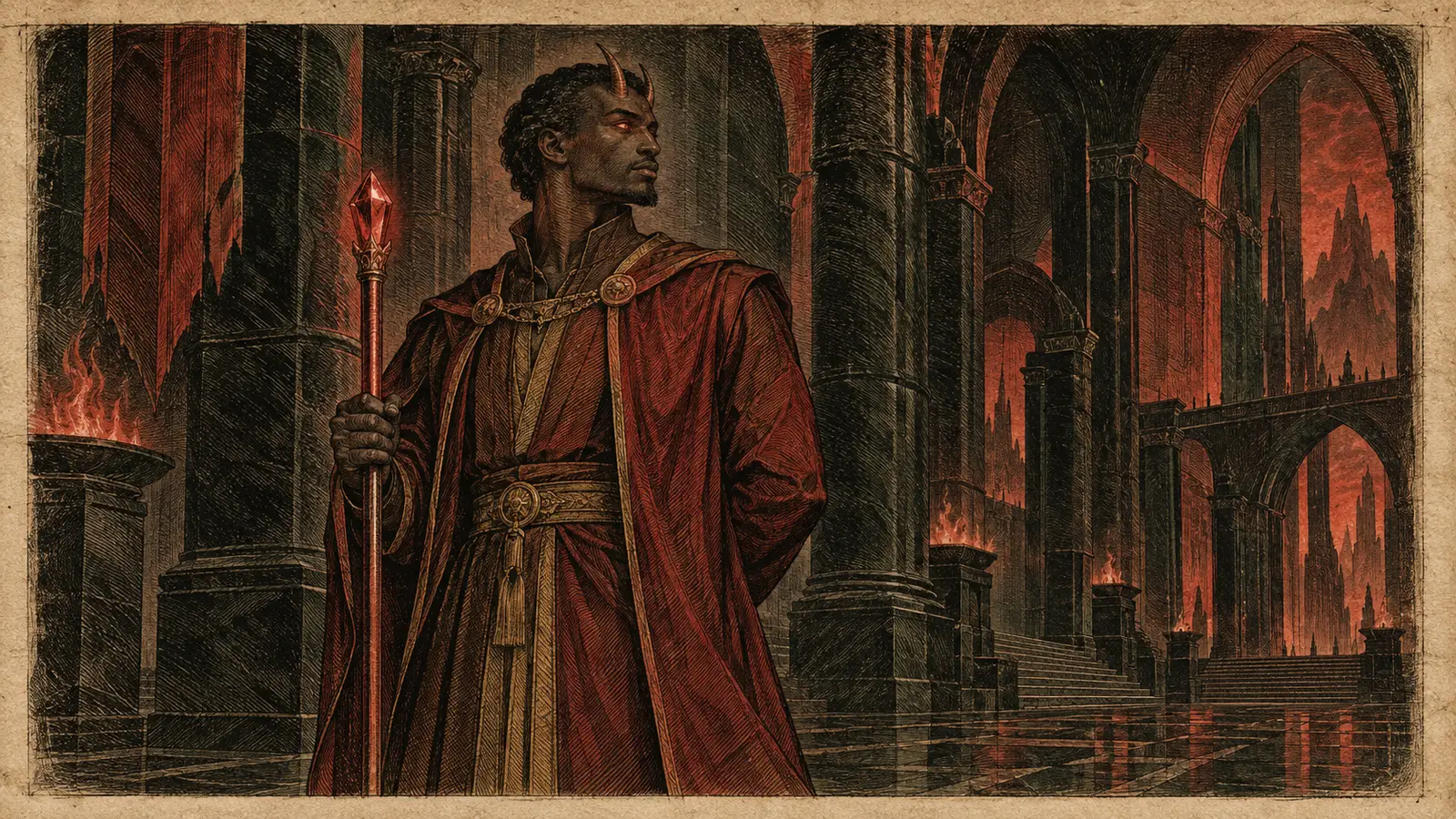
The fifth edition of the game began in 2014, and its Monster Manual returned the devils to their familiar shape. They're lawful evil fiends of the Nine Hells, which can still be called , arranged in a strict hierarchy. rules all, and below him are the archdevils, the Lords of the Nine.
The Great Wheel turned once more. The fourth edition's World Axis faded, and the Nine Hells were again an outer plane of lawful evil.
The Monster Manual told how a damned soul begins. It rises out of the River as a lemure, shapeless, blank and new. A lemure may, in time, be promoted, and the first step up is to the form of an imp. With every promotion after that, a devil receives a new title, a new name for its new rank. The book compared the hierarchy to an army, saying that it "resembles that of a mortal army." The weakest devils are fodder, commanded by lieutenants, who are commanded by captains, who are commanded by generals. The pit fiends lead the armies and advise the archdevils. Every devil knows its place, and every devil schemes without end to improve it.
Every devil also has two names. One is its common name, which it'll give you freely. The other is its true name, which it guards with everything it has. Spoken aloud by the right person, a true name can help summon a devil or strip it of power. Some true names are written on talismans, old objects that bear the name and give power over its owner. It's the old tradition of the 1977 book, a name and a circle, grown into something fuller.
The lineup of the lords had one great change. was now ruled by . Dis still belonged to , to , and to , with her father . was 's, 's and 's. belonged to , and to Asmodeus.
In May 2018 Wizards of the Coast published Mordenkainen's Tome of Foes, with Mike Mearls and Jeremy Crawford leading its design. It's written as the notes of the wizard , one of the oldest characters in the game, a careful scholar of the multiverse's great conflicts. Its first chapter is called "The Blood War."
Mordenkainen frames the war this way. Devils fight forever to stop demons from destroying reality. Demons fight forever to stop devils from ruling it. Neither side's victory would be good for anyone else.
Avernus is the main battlefield, and the devils think that works in their favour. Their supplies and reinforcements are close at hand, coming up from the deeper layers. Avernus is fully mapped. Every ambush point, every stronghold and every prepared defence is known and charted. When a demon horde boils up into it, the devils meet it with hordes of lemures, flung forward to blunt the attack before the real soldiers advance.
There's a deeper reason for the devils' discipline, too. A devil killed outside the Hells isn't truly destroyed. It simply returns, reformed, in the Nine Hells. But a devil killed in the Hells dies forever. On the plains of Avernus a devil isn't fighting for something it can get back. It's fighting for its existence, and that fear keeps the legions tight, coordinated and orderly.
Mordenkainen's notes walk through the lords one at a time, and they read like an intelligence report from a careful observer.
Zariel, the new lord of Avernus, has replaced the pit fiend Bel. She fights the war far more aggressively than he ever did. She lives for battle, and she needs a steady supply of mortal souls to fill her armies.
Levistus still rules Stygia from inside his iceberg. Frozen there for the old crime against , he rules telepathically, his thoughts reaching out through the ice to those who serve him.
Glasya, Asmodeus's daughter, rules Malbolge, and she's a gifted politician. She hates Levistus for the murder of her mother. She runs networks of spies and young cults that gather information for her, and she hopes one day to win her father's approval to destroy Levistus for good. Remember the other story whispered about who really killed Bensozia, and her hatred takes on a strange colour.
Mammon rules Minauros and is greed itself. He dreams of overthrowing Asmodeus, and in his dreams Glasya stands at his side.
Fierna rules Phlegethos, land of volcanoes and rivers of magma, with her father Belial, its former ruler, supporting her.
Dispater's city of Dis covers most of the second layer.
Baalzebul rules crumbling Maladomini. His skill is the small sin, which he nurtures patiently until it grows into damnation.
Mephistopheles rules Cania, and his servant , one of the dukes from 's 1983 preview, is almost as powerful as his master.
The Tome of Foes also explained the bargain at the centre of devilry. A devil always honours the letter of its contracts, and Asmodeus himself enforces them. But devils are ruthless negotiators who rarely miss a loophole. A soul a devil owns is under that devil's absolute control, and most devils accept no other payment for their power and their gifts. Only the intervention of a god can free a soul once it has been claimed. And a mortal who sells their soul goes to the Nine Hells at death and becomes a devil there, its form depending on how powerful the mortal was in life.
The book filled Hell's ranks with new kinds of devil. The abishai came back in all five colours, devil-dragon hybrids still bound up with . The amnizu came back as well, very high in Hell's ranks. The merregons were here, faceless soldiers with no will of their own, who hold their formation and attack whatever their commander chooses. There were orthons, Hell's bounty hunters, who can turn invisible as they hunt. There were nupperibos, and the hellfire engine, a war machine that walks.
And there were the narzugons, perhaps the saddest devils in the book. A narzugon is the soul of a paladin, a holy knight, who turned to evil and made deals with devils. When such a paladin dies, the soul goes where the contract says, and it becomes a narzugon, a knight of Hell leading infernal legions. They ride nightmares bound to them by infernal tack, horses of the lower planes with burning manes. There's something in that image to sit with: a knight still mounted and still in armour, still leading soldiers, but in service to the very thing it once swore to fight.
The book gave tieflings bloodlines tied to each of the nine lords. A tiefling might carry the blood of Asmodeus, or of Baalzebul, Dispater, Fierna, Glasya, Levistus, Mammon, Mephistopheles or Zariel, and each line brought its own gifts.
The newest of those lords, Zariel, has the longest story of all the fifth edition. It was told the following year, in a great adventure that dropped an entire city into Hell.
Chapter XII
The fall of Zariel and the descent into Avernus
In May 2019 Wizards of the Coast announced its next great story at a streamed event called "D&D Live: The Descent." The adventure was Baldur's Gate: Descent into Avernus, and it came out that September, a campaign that carries heroes from their first steps into the middle levels of their power. Adam Lee was its lead designer, and he called Baldur's Gate "the Gotham of the Sword Coast." Wizards described it as a story of betrayals, evils and a fallen angel, in which heroes who enter the Nine Hells might bring redemption to or fall to corruption themselves.
The fallen angel is , and this is her story.
Zariel was once an angel of Mount Celestia, the lawful good plane of the upper heavens. She was zealous, fierce and devoted to the fight against evil. From the heavens she watched the Blood War, demons and devils tearing at each other in the lower planes, and she wanted to go down and fight. Her superiors held her back. They were cautious and restrained, and they believed in patience. For centuries Zariel watched the war from the sidelines, and her impatience grew.
At last she left. She didn't go alone. Her companion was Lulu, a hollyphant, a small celestial creature that looks rather like a tiny golden elephant with little wings. Together they came down to the mortal world, to the city of in , and there Zariel found what she needed: knights. She gathered an order of them around her, warriors who would follow an angel into Hell itself.
In the year 1354, she led them. The knights of Elturel rode behind Zariel through a portal into Avernus, a great charge straight into the first layer of the Nine Hells, against the demons and devils alike.
Not all of them kept riding. Some of the knights panicked at what they saw on the other side. They turned their horses and rode back through the portal into Faerûn, and they sealed it behind them. Their angel and their comrades were left on the far side. Those deserters went home, and they told a story of a glorious victory. They became the first Hellriders, honoured in Elturel for generations, and the whole order was built on a lie about the day its founders ran.
On the other side of the sealed portal, Zariel's army was destroyed and Zariel herself was captured.
Then came to her. He made her an offer, as he makes offers to everyone sooner or later. He offered her Avernus to rule, its armies to command, and the chance to fight demons on her own terms, forever. She would never again have to wait for anyone's permission. In return she had only to swear fealty to him and become an archdevil.
She accepted.
The angel who had come down to fight evil became the lord of the first layer of Hell. The pit fiend Bel was removed from the throne he'd held for so long, and Asmodeus made him Zariel's chief lieutenant. Bel resents it bitterly. He serves her, and he schemes, always looking for a way to win back Asmodeus's favour and his own old seat.
So two tellings of Avernus meet here. In the older books, Zariel was the original lord of Avernus, betrayed and imprisoned by her warlord Bel, her flesh cut away by abishai torturers to feed him. In the fifth edition, Zariel is a fallen angel who came to Hell from outside, accepted Asmodeus's offer and took Bel's throne from him. The game told the story again, and this time it gave Zariel back her power and her rage. Bel, who had been the jailer, now stands at her shoulder in her shadow.
When Asmodeus made his offer, two witnesses saw it: Lulu, and an angel named . Before Zariel could be transformed, they fled, and they took her sword with them. It was a holy blade, and it held a part of her goodness. With demons closing in, led by the demon lord , they hid the sword in the Bleeding Citadel, a fortress made of pure positive energy, a place of life in the middle of a place of death.
Lulu's story didn't end there. Much later, a rakshasa named splashed water from the River across her face. The waters of the Styx steal memory, and Lulu lost hers, along with many of her abilities. Mahadi gave her to Zariel as a gift. But Zariel wouldn't harm her old friend. The archdevil of Avernus, with a little golden elephant before her that no longer remembered her, sent Lulu back to Faerûn unhurt.
That's one of the quietest and most important details of the whole story. A small spark of good still lives in Zariel. Part of her goodness is held in the sword, and part remains in her, the part that knows her fall was wrong.
Now we come to the city.
Elturel stands on the River Chionthar in the Western Heartlands of Faerûn. By the late fourteen hundreds of the Realms' reckoning it was the capital of , a land devoted to , the god of duty and loyalty, and it was defended by paladins of the Order of the Companion.
In the year 1444 something terrible was discovered there. The city's High Rider turned out to be a vampire lord, with a large network of spawn and collaborators in the city around him. Then a light appeared in the sky. A second sun rose over Elturel, and it was called the Companion. Its light burned the vampire lord and all his spawn to ash. The Companion stayed in the sky, shining down on the city, and it became a symbol of holiness. Elturel became a centre of faith.
The credit went to , a priest of Torm who became High Overseer and ruler of Elturel and Elturgard, and he was hailed as the city's saviour. In secret, Kreeg belonged to the Cult of Zariel, which had worked its way into most of Elturel's government. The Companion was his doing. He had made a pact with Zariel, the Pact of the Companion, and the second sun was her side of the bargain.
The other side of the bargain was the Creed Resolute. Kreeg had every citizen of Elturel swear it, an oath to defend their city. It sounded noble. But through the pact, the oath bound souls. The souls of everyone descended from a Hellrider, or from a member of the Order of the Companion, were forfeit, promised to serve after death as devils in Zariel's armies.
About fifty years after the Companion first rose, the pact came due. The second sun that had saved the city became the means of its fall. Elturel was torn out of Faerûn, the whole city, walls and towers, streets and temples, all of its people, and pulled down into Avernus.
There it hangs. Huge chains hold it above the wasteland, and they're slowly lowering it toward the River Styx. Zariel's plan is to sink the city into the Styx, so that the waters wash away every citizen's memory and every one of them becomes a devil for the Blood War. A whole city's worth of souls goes into her ranks, taken lawfully and to the letter. It's the Pact Primeval at work on the scale of a city.
Grand Duke Ulder , ruler of Baldur's Gate, was in Elturel on a diplomatic mission when it fell. He went down with it.
The adventure begins up in the world, in Baldur's Gate. The great port city is struggling. Refugees from Elturel, people who were outside the walls when it fell, have come in a long caravan. The Flaming Fist, the city's mercenary guard, is drafting adventurers, and without Ravengard it's sliding into disorder. The heroes are drawn into investigating a cult of the Dead Three and a powerful local family, the Vanthampurs, both of whom turn out to be working for the Cult of Zariel. Their trail leads through a dungeon of the Dead Three and into the manor, and from there to , the great library-fortress, where they learn what truly happened to Elturel.
Then they go down.
Imagine stepping into Avernus for the first time. The sky is red. The land below is scorched, broken and endless. And there, hanging over the waste, is a city on chains, its bridges ending in empty air, its people huddled in ruined districts trying to hold out. In the cemetery of Elturel, Ravengard searches for a relic of his god, the Helm of Torm's Sight.
Avernus itself is a war zone. Long ago, it's said, it was a busy place, crossed by traders. Now it's a desolate battlefield. , the Queen of Dragons, is imprisoned on this layer, the old ruler of the 1977 book now a captive under the red sky. Her champion, the Cruel, carries the Hand of , one of the old relics of that ancient lich, and he wants to set her free.
Out in the wastes the heroes find Fort Knucklebone, the base of a gang of raiders called the Knucklebones. It's a garage for infernal war machines, hellish vehicles of iron and spikes that race and fight across the plains of Avernus. The Knucklebones answer to Mad Maggie, a night hag warlord. Maggie has a deal with Zariel: Zariel leaves her fort alone, and Maggie keeps the other warlords nearby in line.
The war machines run on soul coins. A soul coin is a heavy disk of infernal iron, inscribed in the Infernal language with a spell that binds a single soul to it. Souls damned to Hell are forged into these coins on , the third layer, and they're used throughout the Hells as money for trade, bargains and bribes. They're fuel as well. Burn a soul coin in a war machine and the soul inside is destroyed forever. The adventure sets that before the players as a choice. A coin will get you across the wastes, but you know what's in it.
The heroes help Lulu find her lost memories, and with her they go looking for Zariel's sword in the Bleeding Citadel. The way divides into the Path of Demons and the Path of Devils. Along either road they can meet demon lords Zariel has defeated, archdevils who would like to see her fall, Tiamat and her champion, and beings who remember Zariel from the days when she was an angel.
The ending can go many ways.
The gentlest is redemption. In a memory dive, the heroes go back to the very moment of Zariel's fall, when Asmodeus first made his offer. There they can argue against him, remind Zariel of who she was, or appeal to her heart, and an appeal from Lulu carries more weight than any other. If enough of them succeed, Zariel refuses the offer this time. She takes back her sword. Her devil form melts away, she becomes an angel again, and Elturel is saved.
If they fail and no one steps in, Zariel chooses defiance. She rejects redemption and destroys her own sword, and the spark of good that lived in it is gone forever.
There are other paths. The heroes may side with another lord of Hell and kill Zariel to free the city. They may offer to serve Zariel themselves in exchange for Elturel's freedom. It's even possible to reach the end without saving Elturel at all, and if Zariel isn't stopped, a chain of events might pull Baldur's Gate itself down into Avernus too.
In the story the game later followed, Elturel comes home. The city rises out of Avernus, and Ravengard returns with it. What came next, when the Grand Duke tried to travel home from the rescued city, belongs to a later tale, one that a great many people around the world would come to know. We'll get there. First, let's look at the creatures and peoples who gather around the devils.
Chapter XIII
Kin, servants and offshoots
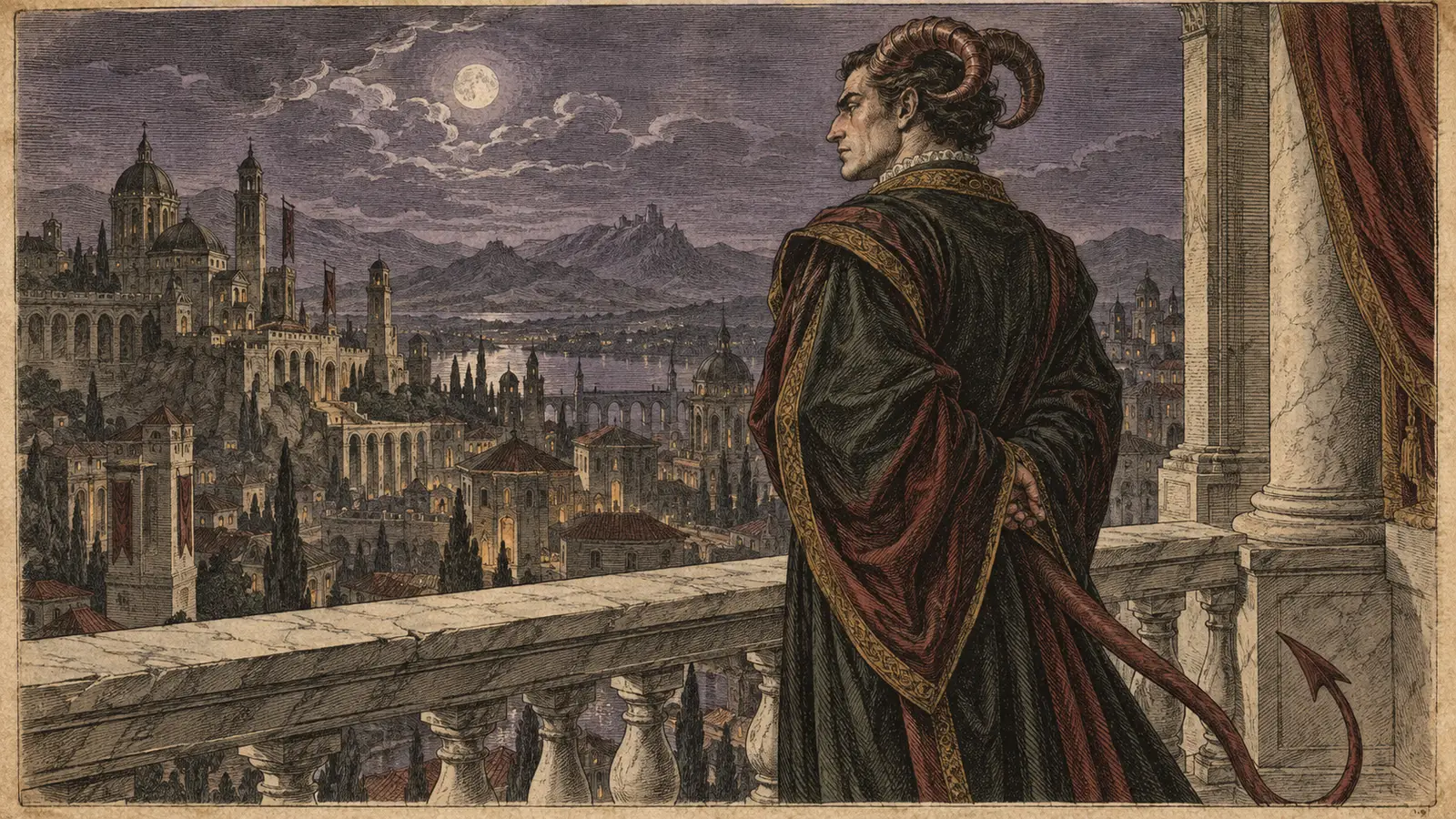
A devil is never alone. Around it gather servants and steeds, cousins and descendants, and the mortals who carry its blood or its bargain. Let's walk among them for a while.
The tieflings came first into the game in 1994, in Planescape. When the setting's designer, Zeb Cook, asked for a Germanic-sounding word for humans with fiendish blood, coined the name: "tief," the German for deep or low, and "-ling," offspring. They were the children of the lower planes. In Planescape a tiefling was a mix of human and something else, something from the evil lower planes. It might be a devil, a demon or some other fiend, and each tiefling looked different. One might have horns, another sharp pointed teeth, a third extra fingers, or cloven hooves instead of feet, or a tail, or eyes of an odd colour. They didn't always breed true, and most had no particular tie to .
The third edition kept them among the "planetouched" in its Monster Manual, and they became a playable people of the Realms in Races of Faerûn in 2003. In the fourth edition they became one of the core races of the game, and they took on a single look: large, thick horns, long tails and pointed teeth. Their hooves became feet. We've already heard their fourth-edition story, the nobles of and their month of dreams.
In the fifth edition's Player's Handbook, tieflings know that a pact struck generations ago put the essence of Asmodeus into their bloodline, along with that of many powerful devils who serve him. They carry horns and tails and skin in vivid colours. They can work small wonders, and if they're struck, they can answer with a burst of hellfire. In they're rare, a few thousand scattered across the land, and they meet suspicion wherever they go. The Tome of Foes gave them the nine bloodlines. A tiefling of 's line might bring sickness and madness, of 's line disguise and the reading of thoughts, of 's line charm, and of Asmodeus's line fire and darkness and a keen mind.
Warlocks are mortals who bargain for power, and many of them bargain with devils. In the fourth edition the warlock offered three pacts, and one of them was the Infernal Pact, an agreement with a devil of the Nine Hells. In the fifth edition the warlock's patron may be the Fiend, a being of the lower planes whose aims are evil, even if the warlock opposes them, and whose deepest wish is the corruption or destruction of everything, the warlock included. The possible patrons named in the book include the archdevils Asmodeus, Dispater, and , alongside demon lords and great yugoloths, or an unusually mighty pit fiend. The fiend's gifts lean toward fire. And when a fiend-pact warlock fells an enemy, the patron's blessing flows into them, a little dark strength drawn from each fallen foe.
The chain devils have a strange history. They're the kytons, lawful evil beings counted among the infernal and called chain devils by the uninitiated, but they aren't true devils. Some say they lived in Hell before the devils came. Others say a sadistic power brought them there later. They roam the planes seeking pain, both to give it and to feel it. In Planescape they had a city on , the bog of the third layer, a place of acid rain and flesh-cutting hail. That city is called Jangling Hiter, the City of Chains, and it hangs from endless chains of slimy iron, swaying in the sleet. Picture it: a city suspended, creaking, the chains disappearing upward into the storm. The kytons became the chain devils of the third and later editions. Another game, 's Pathfinder, took the old name "kyton" for its own chain-wrapped fiends and later renamed them velstracs. In that game they fled Hell long ago for the Plane of Shadow and preach perfection through mutilation in service to a dark god called .
The imps are the smallest devils, and the oldest of their servants. In the first edition they were made to be familiars to lawful evil spellcasters, whispering advice that always, somehow, served the Hells. In the fifth edition an imp can become a rat, a raven or a spider, and it's the mischievous side of lawful evil, spreading corruption and sedition one small suggestion at a time. Across the wheel in the Abyss lives its demonic counterpart, the quasit, a tiny demon that flatters its master while pushing it always toward chaos.
The hell hounds came into the game in 1975 and have been in every edition since. Rumour says they came from the plane of fire, but most of them are claimed by the devils of the Nine Hells. They serve devils, fire giants and other evil masters as guard animals and companions, and they hunt in packs, breathing fire.
The nightmares are horses of the lower planes, with flaming manes, burning hooves and smouldering eyes. In the fifth edition a nightmare is made by a terrible ritual that strips the wings from a pegasus and drives it to evil. Nightmares can step between the mortal world and the misty Ethereal, and many of them know where the doors to the lower planes lie. A narzugon, the fallen paladin of Hell, binds a nightmare with infernal tack, and the horse serves whoever wears the spurs.
The abishai, 's dragon-coloured devils of 1983, belong mostly to in . Later lore says Tiamat made them together with Pearza of the Dark Eight, the pit fiend of research. One of Tiamat's devil servants, Amduscias, leads twenty-nine companies of them, three hundred and thirty-three abishai to a company, in the dragon queen's colours.
The cambions are the children of fiends and mortals. In the first edition a cambion was the child of a demon. In the fourth, cambions were the children of devils and mortals, looking like tieflings with working wings. In the fifth, a cambion is the child of a mortal and a powerful demon or devil, with horns, bat wings and cloven hooves that scorch the ground, though it often hides behind a mortal face. The most famous cambion of all is Iuz of Greyhawk, though his blood is demonic.
The yugoloths we've already met, the neutral evil mercenaries of the Blood War, first called daemons in the game. Their lore holds that a sisterhood of night hags in made the first yugoloths, and it's widely believed they did it at the commission of Asmodeus. If that's so, the mercenaries who sell their swords to both sides of the Blood War were ordered by one of those sides in the first place, which would be very like him.
The rakshasas, tiger-headed fiends with backward hands, have been listed among the dwellers of the Nine Hells since the early editions. They aren't part of the hierarchy. The devils treat them as distrusted visitors and allies of convenience. , who stole Lulu's memories, is one.
Then there are the contracts. An infernal contract is a binding agreement between a mortal and a devil of the Nine Hells. The devil grants something significant, and the mortal owes a specific debt. Nearly every contract has three parts. There's an ongoing benefit, what the mortal receives. There's a payment, often a supernatural restriction or prohibition, something the mortal must never do again or must always do. And there's a termination clause, a condition that ends the whole agreement when it's met. Every contract also includes a clause that damns the signer's soul to the Hells at death, with ownership going to the devil who signed it.
Breaking a contract is costly. A mortal might lose all their wealth, take on fiendish features in their own body, or lose their soul. Devils punish vagueness in a contract too. If a clause is loosely written, the devil regards it as sloppy work, and sloppiness leaves loopholes, which no devil can forgive in itself.
And there are the soul coins, which we've seen in the wastes of Avernus. Each one holds a soul, and each soul has a story. One might be a mortal who defaulted on a deal. Another might be the victim of a night hag's curse. If you hold a soul coin, you can feel the soul inside it, raging or full of despair. You can draw on its life to steady yourself. Or you can question it, and it must answer truthfully from what it knew in life. A coin holds only so much before it's spent.
Chapter XIV
Across the table from a devil
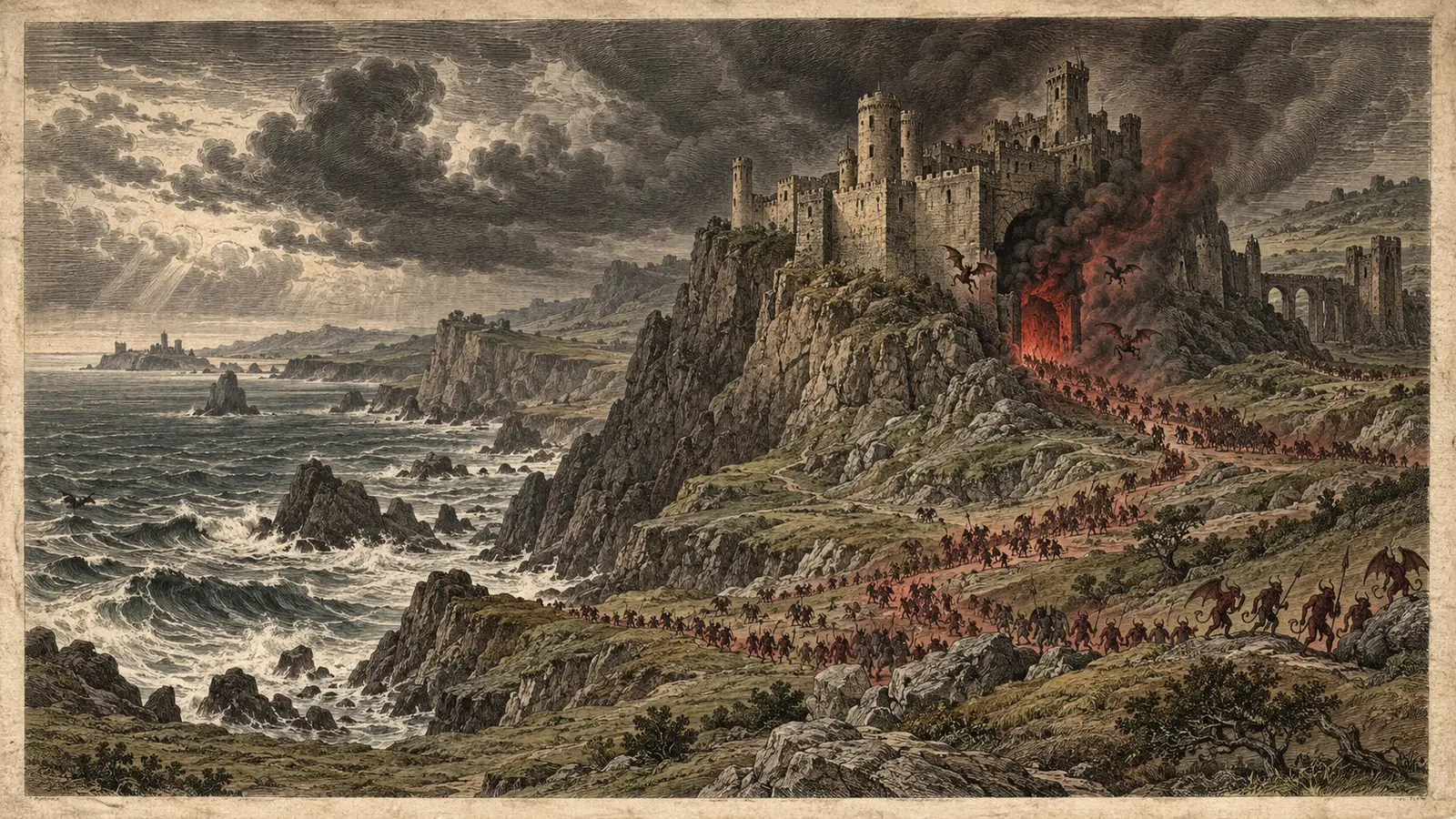
So far we've walked the Hells as a story. Now let's sit down at a table, with dice and paper and friends, and imagine what it feels like when a devil walks into the game.
Fighting a devil is a particular experience. In the fifth edition most devils can see through even magical darkness, so the shadows that might hide you from a goblin don't hide you from them. They shrug off spells more easily than most creatures. They're immune to fire, so the wizard's favourite fireball will roll harmlessly off them, and to poison. In the 2014 rules they resisted cold, and they resisted ordinary weapons too, unless those weapons were magical or silvered. So a party heading toward the Hells would think ahead. They'd silver their blades, leave the fire spells for other foes and hope the cleric had prepared something holy.
The pit fiend is the great test. It carries an aura of fear around it, so that anyone who stands near it must steel their nerves just to keep their footing. Its blows are magical. It can call darkness and dispel magic, and it can hurl its own fireballs. In older rules it could summon other devils to its side, bearded devils, barbed devils or an erinyes.
Devils behave differently from other monsters in a fight, and you notice it at the table. A demon might flee, or turn on its allies, or wander off after something shinier. A devil carrying out an assigned duty doesn't flee. It has orders, and someone above it will hold it to them. It'll fight on however badly it's hurt, because what waits for it if it fails is worse than what you can do to it. Bearded devils come forward with their long glaives without fear. swoop down, winged and grand, and at first glance a hopeful hero might mistake one for an angel.
Then there's summoning, which is far more dangerous than fighting. The fifth-edition book Xanathar's Guide to Everything, in 2017, gave wizards and warlocks a spell called Infernal Calling. It takes a full minute to cast, and it consumes a ruby of great value. It brings a devil of middling power to you, a barbed devil, say, or a bearded devil. But the devil doesn't arrive as your servant. It arrives unfriendly, and it acts as it pleases. It might attack. Or it might do what devils do best and begin to tempt you, offering limited service in exchange for some evil act. If you want it to obey, you'll have to out-will it. If you know its true name and speak it, you have an advantage. And if you hold its talisman, the old object bearing that name, it obeys every command you give it. Here are the binding rituals of the old grimoires and the protective circles of 1977, turned into something you can actually try at the table and get badly wrong.
The heart of devils at the table, though, is the bargain. Descent into Avernus built its whole campaign around it. Anyone from a lowly imp up to an archdevil might offer the heroes a deal. The rewards are real: a minor magic item, gold, a reprieve from death. Many of the deals are small, and that's the danger. The quietest bargains are of the kind that says: do what you were going to do anyway, and get a little extra. You take it. Why wouldn't you? Then the next one comes, and the one after that, and so a mortal walks the road of temptation one reasonable step at a time.
The adventure has an optional rule with a wry name, "Bargain Basement Death Saves." When a hero lies dying in the Nine Hells, an archdevil may speak into their mind and offer to save them. The usual offer is a guaranteed recovery, the dying hero springing back to their feet at once, in exchange for a task to be named later. It's an undisclosed debt. You don't learn the price until it's due.
One of the deals in the adventure is offered by , the rakshasa who runs a travelling shop called the Wandering Emporium, which is seen only by those he chooses to show it to. Mahadi's bargain gives a hero hands that bend backwards as easily as forwards, which turns out to be very useful for reaching into the guts of a war machine to sabotage or repair it. It's a small gift, a strange one, and a permanent one.
At tables everywhere, players have learned to read their contracts. They watch for clauses that mean something other than what they seem to say. They argue over what a breach would cost, whether the soul, all their wealth or some prized magic item. They look for ways out, and find that leaving a deal is never cheap. It might cost a soul coin, gold, a sacrifice in the devil's name, or even an artifact. And there's a saying passed around among players with the weary affection of long experience: if you find a loophole in a devil's contract, you only signed with a particularly stupid devil.
The Fiendish Codex II had its own word for those who fight the devils' trade, the soulguards, a faction set against infernal bargains and the theft of souls. It's comforting to know someone is standing at the door.
Descent into Avernus has been played at a great many tables, and for years its players have written and shared their own ways of running it, reordering its chapters, retelling its villains and talking over how best to bring and Lulu to their final meeting.
Smaller adventures carried the Hells to the table as well. In 2019 a charity adventure called Infernal Machine Rebuild sent heroes travelling through time in search of the scattered parts of a strange device, the Infernal Machine of Lum the Mad. Its journey visits the lost Temple of , the exiled archdevil's forgotten shrine, and even the building of the Tomb of Horrors, which we wandered through in an earlier episode. Once the machine is finished, it can be turned into an infernal war machine for the roads of .
At the very end of the second edition there had been one great adventure of the war itself, in the Hellbound box: three Blood War adventures, one of them an epic in which the heroes could permanently weaken the fiends and change the course of the eternal war. Most of the time, though, devils at the table are not enemies to be beaten so much as people to be dealt with. You talk to them. You negotiate. You count your fingers afterward.
And sometimes, rarely, the devil is the one who got caught. Remember Forked-Tongue in his house in the Outlands, bound to do good deeds by a contract he can't escape, helping every passing stranger through clenched teeth. It's a gentle joke and a true one. Contracts bind both parties, and even a devil can sign a bad one.
Chapter XV
Hellfire beyond the game
Now we step back from the table and look out at the wider world, where the devils of Dungeons and Dragons have cast a long shadow, and sometimes had one cast on them.
In the early 1980s, a moral panic grew up around the game in the United States. Some campaigners came to believe it was dangerous, that it led young people toward the occult. A mother in Virginia named Patricia Pulling lost her son in 1982 and came to blame the game. She founded an organisation called Bothered About Dungeons and Dragons, BADD for short, and campaigned against the game until her own death in 1997. Her case against TSR was dismissed in 1984. That same year Jack Chick published a short comic tract called Dark Dungeons, which told a lurid story of two teenage players drawn into witchcraft, and it became one of the most famous tracts he ever printed. In 1985 the television programme 60 Minutes ran a segment that featured both Pulling and Gary . Even the art and the gods of the game drew fire. A televangelist described the 1980 book Deities & Demigods, with its cover by Erol Otus, as "exactly like witchcraft."
Devils were caught in the middle of it. Their names came straight out of scripture and old religious writing, from the Book of and from the Book of Kings, and that made them an easy target. We've already seen what followed. In 1989 the words "devil" and "demon" left the game, the baatezu and tanar'ri took their place, and the whole new language of was born out of that pressure. In a curious way the panic gave the Hells some of their most beloved lore: the castes with their strange names, the Blood War and Planescape's .
Decades later the panic itself became a story. In 2022 the fourth season of the television series Stranger Things introduced the Hellfire Club, a group of players led by Eddie Munson, a heavy-metal-loving dungeon master. He chose the name to mock the people who thought his music and his dice made him an agent of the devil. The season's plot draws directly on the panic of the 1980s. Its great villain is , the old lich of the hand and eye, who isn't a devil at all, but the name of the club and the shadow of those years hang over the whole season.
The look of the devils changed over the years, and one artist did more than most to change it. Tony worked on the Monstrous Manual in 1993. He later said he wanted his pictures there to "blow away" the other artists, and that work brought him to Planescape. His drawings gave the outer planes their rusted, organic look, and his long, angular fiends defined how the baatezu and the Blood War looked through the 1990s.
Computer games carried the Hells to people who had never rolled a die. Planescape: Torment brought Baator, the Pillar of Skulls and Forked-Tongue to players in 1999. Neverwinter Nights took them to the ice of in 2003. But the largest of all these journeys came in 2023.
Baldur's Gate 3, made by Studios, is set in the Forgotten Realms shortly after the events of Descent into Avernus. It became one of the most celebrated games of its time. It won Game of the Year at The Game Awards in 2023, and Larian spoke of its players growing to "way over ten million" in a short time. And it's full of devils.
The first is , the cambion son of . He's a dealmaker, theatrical and courtly and endlessly patient, who appears at the edges of the heroes' journey, always with an offer. He has fire magic and a talent for binding contracts. His domain is the House of Hope in , an opulent mansion that serves as an archive and a prison for souls bound by his contracts, reached through a portal in a shop called the Devil's Fee. He offers the heroes help against their great enemy, a monstrous brain that threatens the city, in return for something he very much wants: the Crown of , a relic of terrible power. With it he means to overthrow his own father and rule a united Hell.
In the House of Hope lives , an incubus magically compelled to wear Raphael's exact face, which tells you everything you need to know about Raphael's opinion of himself. Another of his prisoners is , an orthon, one of Hell's bounty hunters, bound by Raphael's contracts.
Raphael was played by Andrew , who gave him his voice and his movements. In 2024 Wincott won the BAFTA Games Award for Performer in a Supporting Role. In the game's final confrontation with him, Raphael sings his own theatrical theme, "Raphael's Final Act," in the grand manner of a stage villain. The game's composer, , won the BAFTA for music.
Other companions bring Avernus with them. is a tiefling barbarian of 's bloodline. As a young woman in Baldur's Gate she was hired as a bodyguard by a lord named Enver , and she trusted him deeply. He sold her to Zariel in exchange for the resources to build his own mechanical soldiers. Zariel took out her heart and replaced it with an infernal engine, and for about ten years Karlach fought in the Blood War on the plains of Avernus. She escaped at last, but the engine in her chest runs so hot that her touch burns, and outside Avernus it overheats. Her story is one of the warmest in the game, a big-hearted, laughing woman carrying a piece of Hell in her chest.
Wyll is the son of Grand Duke , the same Ravengard who fell into Avernus with and came back. Wyll is a warlock, and his patron is , a cambion in the service of Zariel. She calls the mortals in her charge her "pets." Along one of the roads of his story, Wyll trades his own freedom for his father's and becomes the Blade of Avernus, bound to hunt devils and demons for Mizora's mistress. Ravengard himself, returning from the rescued Elturel, is captured on the road home, and so the game picks up the thread exactly where Descent into Avernus left it.
Over the course of that one game, millions of people met a devil's son who sings, an angel-turned-archdevil they never saw but always felt, a woman with Hell's engine for a heart, and a stack of contracts in an opulent house in Avernus, each one with a soul attached. Many of them had never opened a rulebook. Through Baldur's Gate 3 they came to know the Nine Hells as the game had built them over nearly fifty years, from Gygax's ruby rod and Greenwood's layer names, through the Blood War and Zariel's fall, down to the fine print.
Chapter XVI
The Hells today
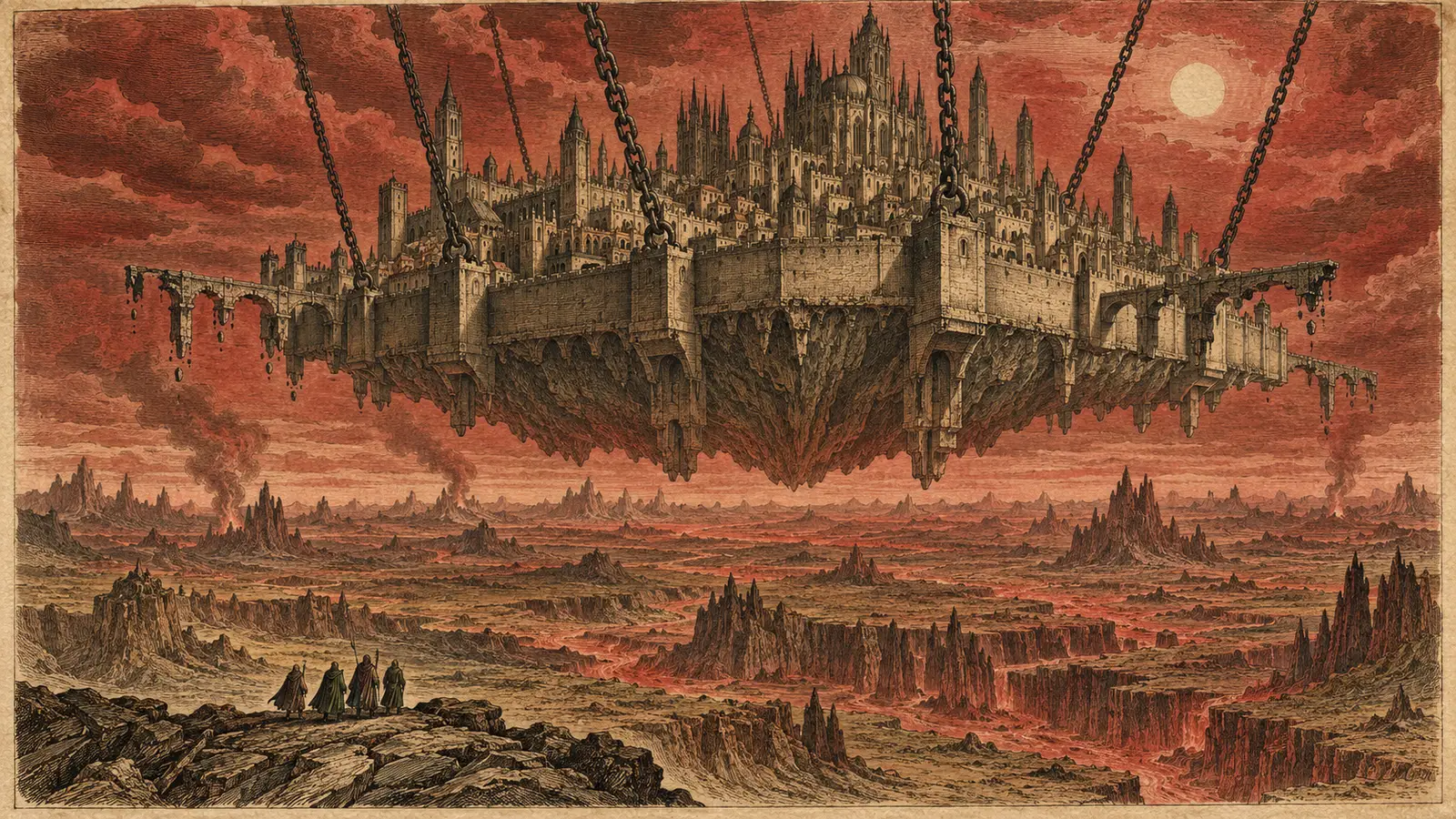
We come now to the present day, and to the newest version of the rules.
Between 2024 and 2025 Wizards of the Coast revised the fifth edition's core books. A new Player's Handbook came in 2024, then a new Dungeon Master's Guide late that year, and then, in February 2025, a new Monster Manual, led by Jeremy Crawford and Wesley Schneider.
The tieflings changed. The bloodlines of the nine lords gave way to three fiendish legacies. A tiefling now chooses whether their blood comes from the devils, from the demons, or from other fiends such as night hags and yugoloths. The infernal legacy carries the old gifts of Hell: resistance to fire, a bolt of fire at the fingertips, a burst of hellfire answering any blow, and the power to call darkness. So the devil-blooded tiefling is now one heritage among three. For a long time every tiefling had been a child of . Now they can again be children of any of the lower planes, much as they were in Planescape.
The Fiend still stands among the warlock's patrons. It has a new gift at the height of its power, called Hurl Through Hell. With a single strike the warlock can send an enemy tumbling through a nightmare landscape of the lower planes, and the enemy returns shaken and wounded, having seen what lies below.
The new Dungeon Master's Guide set out the cosmos again, in a long chapter written by James Wyatt. It's the Great Wheel once more, sixteen outer planes in a ring, with the evil ones at the bottom and , the City of Doors, at the hub. The Nine Hells sit in their old place, the plane of lawful evil, between and . After all the reshaping of the editions, the wheel is back where it started in 1977.
The new Monster Manual gave every devil a trait that puts an old piece of lore directly into its description. It's called Diabolical Restoration, and it reads: "If the devil dies outside the Nine Hells, its body disappears in sulfurous smoke, and it gains a new body instantly, reviving with all its Hit Points somewhere in the Nine Hells." This is what meant when he explained why devils fight so carefully at home and so boldly abroad. Slay a devil in your own world and it goes back to the Hells, whole and remembering you. Only in the Hells can it truly die. The horned devil, the chain devil, the ice devil and many others carry the trait.
The book let go of some old bookkeeping too. Devils no longer resist ordinary weapons, so heroes no longer need silver blades to wound them. The spined devil is there, a small winged spy with quills, the eyes and ears of greater devils. The bearded devil, the horned devil, the chain devil, the ice devil and the pit fiend are there. The lords themselves aren't. The new book holds no archdevils, so Asmodeus and the Lords of the Nine are left for other books to describe.
In April 2025 Wizards released a free version of the revised core rules under a Creative Commons licence, so that anyone may build on them.
The last great book devoted to the Hells came a little before the revised rules. In October 2023, Wizards released Chains of Asmodeus as a charity title, written by James and the novelist Adrian . It's a high-level adventure through the Nine Hells, with maps and details of every layer, around fifty new monsters, magic items, and descriptions and statistics for Asmodeus and the major archdevils. For those who want to walk every layer of the Hells, from the red sky of down to the Serpent's Coil, it's the most recent map.
And Descent into Avernus remains the great adventure of the Hells. People still sit down to run it under the newest rules, still see hanging on its chains above the wasteland, and still try to reach the angel inside the archdevil before the city touches the .
Chapter XVII
The fine print by lamplight
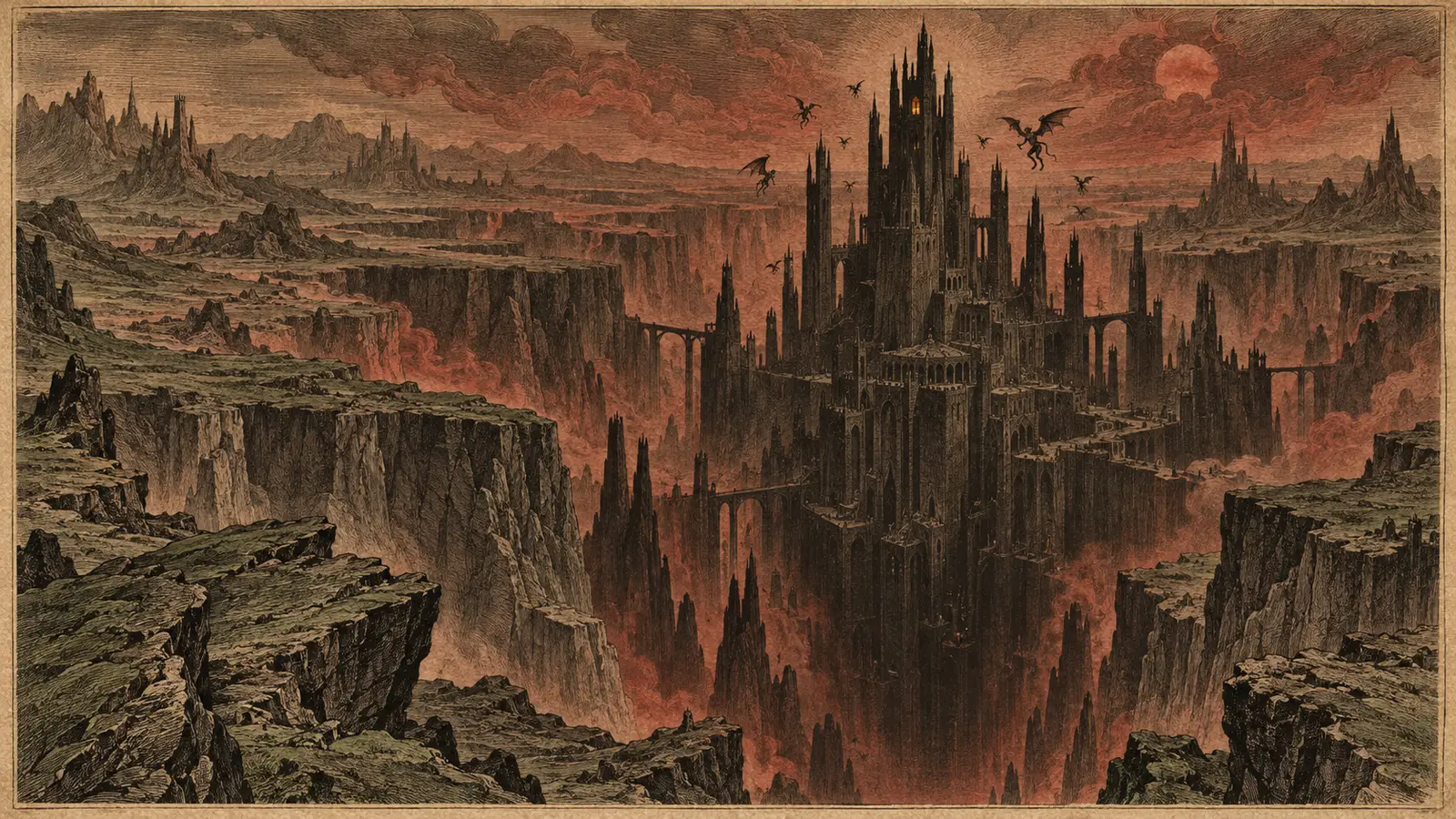
We've come a long way down tonight, from burning a fish's heart in a room in Media, through Dante's iron city and Milton's council, and through 's ruby rod and Greenwood's nine names. We've seen the strange new words of , the Blood War with its Dark Eight, the Reckoning and the slug of . We've heard the trial of the angels and the four words about the fine print, seen the serpent bleeding in the Coil, watched the city on its chains, and gone through the long fall of an angel who wanted only to fight.
There's one thing all of it shares.
The demons of the Abyss are a fire, a flood, a hunger. They take what they want, and they never wait. Devils wait. That's their whole nature. A devil can stand in the same rank for a thousand years and call it patience. A lemure rises from the with no name and no face and begins, very slowly, to climb. Promotion by promotion over ages it's polished into something sharper, colder and more exact, and perhaps one day, in a time we can hardly imagine, it'll stand at a table in as a general, planning a battle against an enemy that will never stop coming.
And every bargain a devil makes is patient. It doesn't need to take your soul tonight. It only needs you to sign, and to keep your word, and to live out your life, however long that is. The contract will still be there at the end, exactly as it was written. Devils are the only fiends who would rather you agreed.
So picture, if you like, the bottom of everything. , the ninth layer, is a land of rifts so deep that light gives up before it reaches the floor. In the deepest of those rifts the fortress of rises from the dark, tower on tower, and in its halls there are clerks. You might not expect clerks in Hell, but of course there are. Somewhere in that fortress, in a quiet room, a lamp burns, and by its light a devil is reading a contract. It reads slowly, every line and every clause. It isn't in any hurry. It never has been. Out in the wastes above, the war goes on, and souls drift down the Styx into new shapes. Deep below the fortress, in the Serpent's Coil, something vast breathes once in the dark and lies still again. One drop of blood falls to the stone.
The lamp keeps burning. The devil turns the page. And somewhere, in a copper citadel, on the clockwork plane and on the holy mountain, the three copies of the oldest contract of all lie folded and unchanged, signed long ago and still in force, waiting for no one in particular, because they've always known they would be kept.